How Arches Are Formed
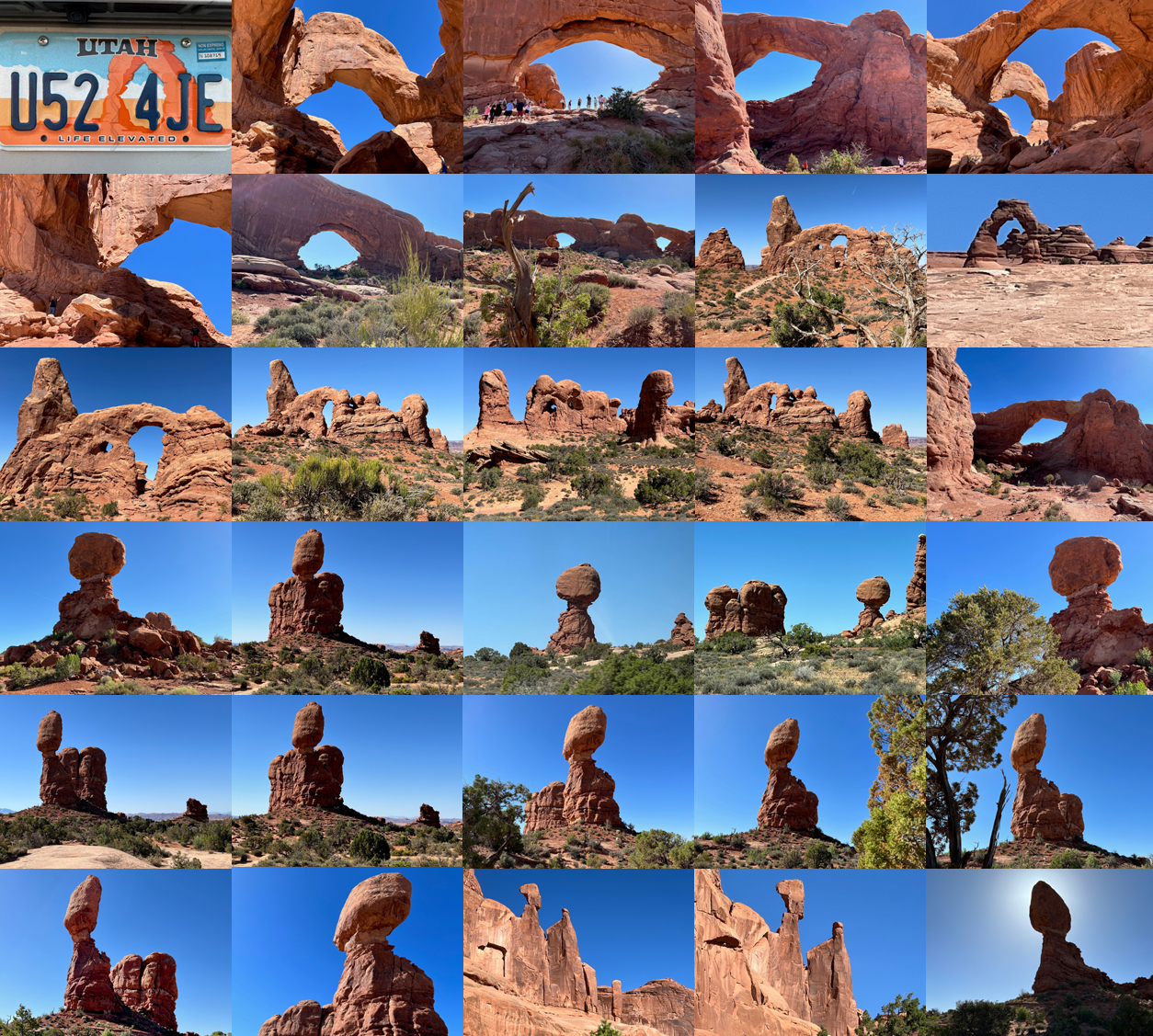
In the Windows area, you can see many stages of arch formation.
Entrada Sandstone - the rock in which arches are formed - was deposited here as sand more than 150 million years ago.
Over time it was buried by new layers, hardened into rock, and shaped by the powerful forces of erosion.
Balanced Rock
The forces of erosion and sculpting are more than just arches. Balanced Rock clearly shows the various layers responsible for the amazing defiance of gravity.
The forces of erosion and sculpting are more than just arches. Balanced Rock clearly shows the various layers responsible for the amazing defiance of gravity.
The caprock of the hard Slick Rock Member of the Entrada Sandston is perched upon a pedestal of mudstone. This softer Dewey Bridge member of the Carmel Formation weathers more quickly than the resistant rock above. Eventually, the faster-eroding Dewey Bridge will cause the collapse of Balanced Rock.
Entrada Sandstone stands at a total height of 128 feet. The boulder height is 55 feet and weighs over 3,500 tons!
Chip-Off-The-Old Block was a steady companion to Balanced Rock until it toppled in 1975.
Windows Trails
A trail leads to North and South Windows, and a short spur trail goes to Turret Arch, a distinctive landform with two openings. In back of two Windows, is "the Spectacles."
Park Avenue
The sheer walls of this canyon reminded early visitors of buildings lining a big city street. Rising majestically, these geologic "skyscrapers" tell the story of Entrada Sandstone.
Entrada Sandstone began forming more than 150 million years ago as tidal flats, desert, and beach deposits. Over time, layers of rock, perhaps a mile thick, covered these deposits. Tremendous pressure from these rock layers compressed the buried sand into sandstone and cracked it. Erosion then removed the overlying rock layers and the Entrada began to weather.
Within the past two million years, erosion of the cracks in the Entrada has left vertical slaps like the rock wall to the right. These slabs, called fins, are the first step in arch formation.
Sequence of Rock Layers
1. Moab Tongue (youngest layer) Deposited as dunes on a beach, this light-colored sandstone has almost completely eroded away.
2. Slick Rock Member (middle layer) This fine-grained, cliff forming sandstone dominates the park and is prone to arch formation
3. Dewey Bridge Member (oldest layer) This muddy-looking reddish-brown layer is the lumpy remains of a tidal flat environment and is weaker than the layers above, aiding arch formation.