|
|
1 Pl. Denfert-Rochereau, 14e
www.catacombes.paris.fr/en
https://www.tripadvisor.com/Attraction_Products-g187147-d189229-The_Paris_Catacombs-Paris_Ile_de_France.html
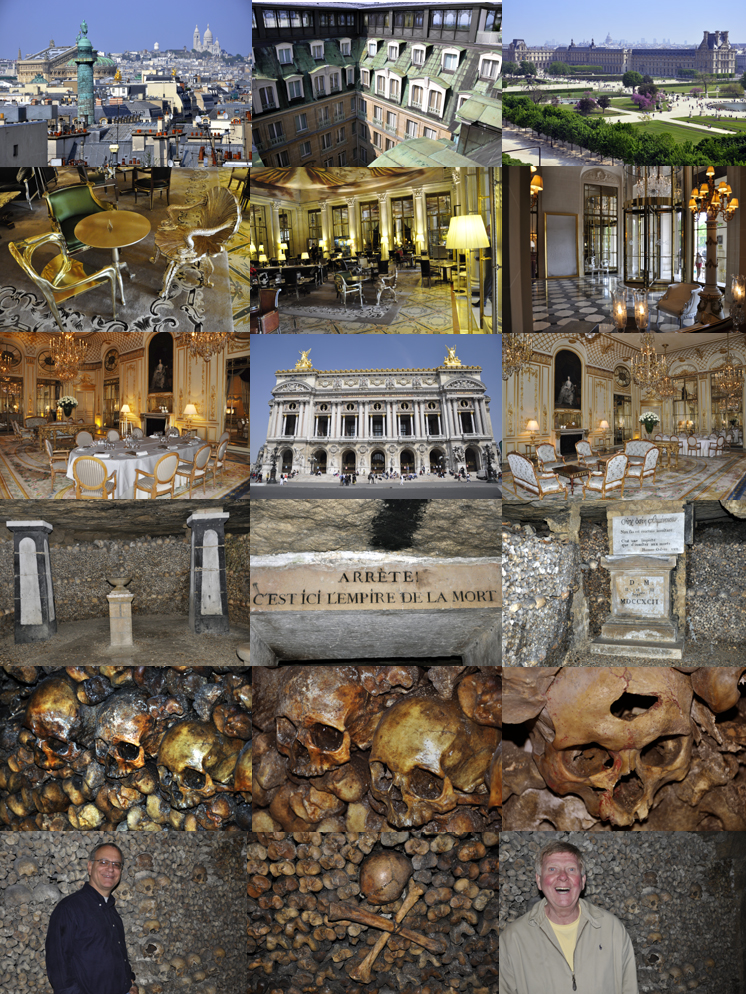
The tunnels leading to the ossuary pass a representation of a fort, carved out of the rock by an 18th Century tunnel worker in his leisure time. Then the chamber with black and white painted pillars leads off to a doorway over which are the words: "Arrete! C'est ice l'empire de la mort."
Beyond it stretches tunnel after tunnel, lined on each side with neatly-piled bones interspersed with rows of grinning skulls and enlivened by plaques bearing inscriptions of death. There are between five and six million skeletons in this temple of death. You will only see a small part of the 187 miles of tunnels, created by stone-quarrying for both granite and plaster of Paris.
The Catacombs of Paris (Catacombes de Paris), Extending south from the Barrière d'Enfer ("Gate of Hell") former city gate, this ossuary was created as part of the effort to eliminate the city's overflowing cemeteries. Preparation work began shortly after a 1774 series of basement wall collapses around the Holy Innocents' Cemetery added a sense of urgency to the cemetery-eliminating measure, and from 1786, nightly processions of covered wagons transferred remains from most of Paris' cemeteries to a mine shaft opened near the Rue de la Tombe-Issoire.
The ossuary remained largely forgotten until it became a novelty-place for concerts and other private events in the early 19th century; after further renovations and the construction of accesses around Place Denfert-Rochereau, it was opened to public visitation from 1874. Since 2013, the Catacombs have numbered among the fourteen City of Paris Museums managed by Paris Musees. Although the ossuary comprises only a small section of the underground mines of Paris, Parisians currently often refer to the entire tunnel network as the catacombs.
Public Transit Access: "Denfert-Rochereau" M-4, M-6, RER-B