A �Leap� of Leopards
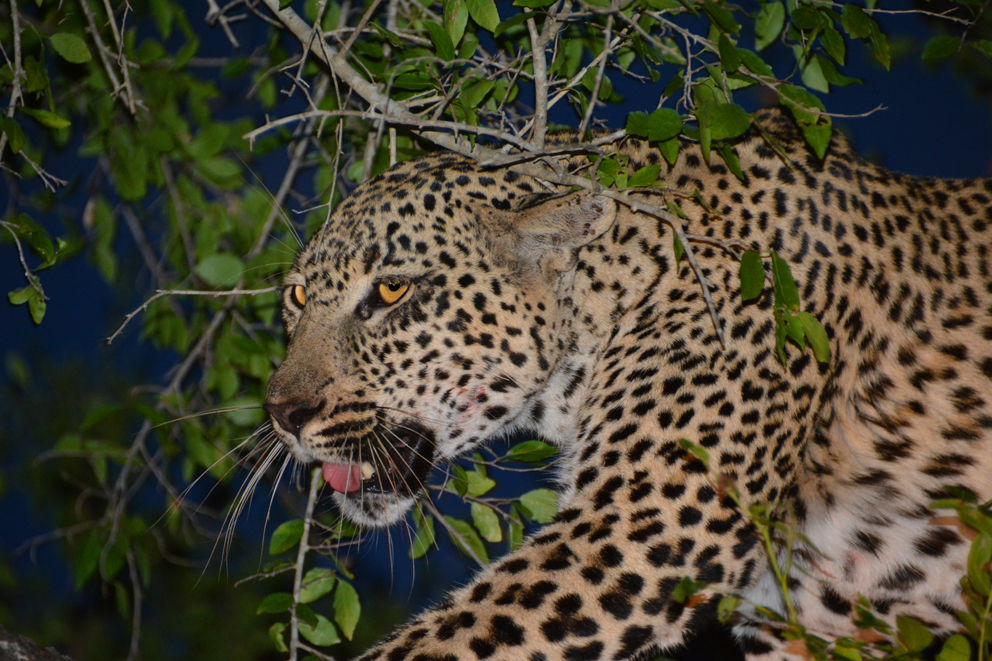
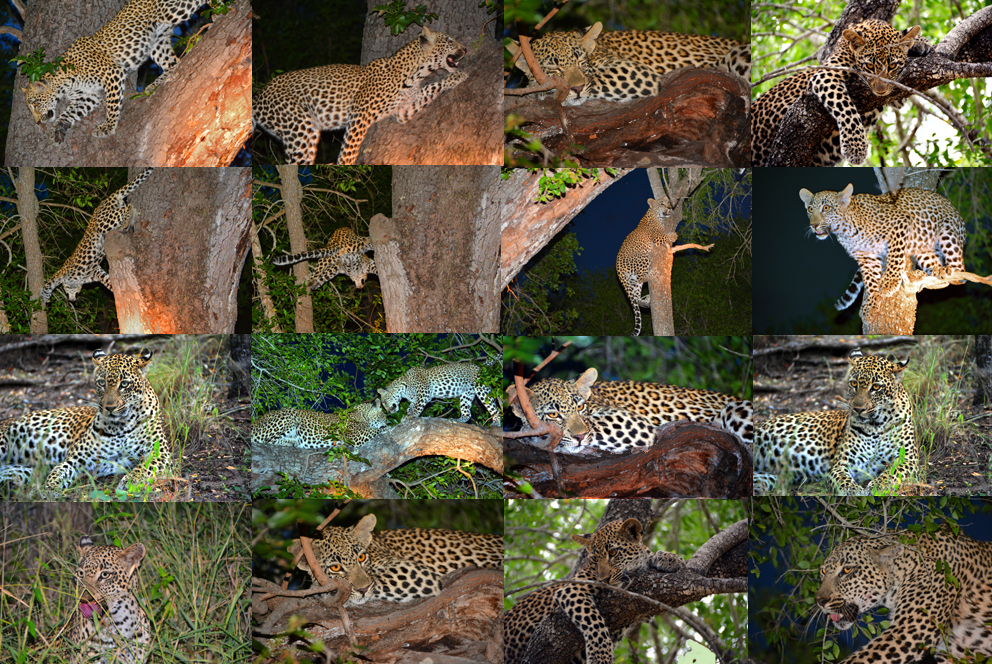
The leopard; Leopard Panthera Pardus, known as "the prince of cats," is relatively short legged, with rosettes of black spots on a tawny coat. They tend to be elusive, shy and solitary, (unless mating or caring for cubs), and yet they are Africa's most powerful predator for its weight. The sexes only come together to mate. Leopards become sexually active at three years of age and the female has a gestation period of just over three months. One or two cubs may remain with the mother for up to two years. Females have overlapping home ranges, but males have larger territories. Cubs are entirely dependent on their mother for food for eight months. They have a diverse diet, but small and medium-sized antelope, (impala), gray duiker and warthogs comprise most of the leopard's diet. Large kills are hoisted into tall trees, out of the reach of lions and spotted hyenas � the leopard�s principal competitors and arch enemy.
The male leopard presides over a larger area than the females, (approximately eight square miles), often encompassing two or three female territories within their own. Sabi-Sand, located in Kruger National Park, South Africa along the Sabie River is one of the best locations in the world to observe the elegant, sleek, muscular leopard in its natural habitat.
For information on the best insect repellents, check out:
https://www.consumerreports.org/insect-repellent/best-insect-repellents-for-you-and-your-family/