Sumatra, Indonesia
Kuala Lumpur, Malaysia
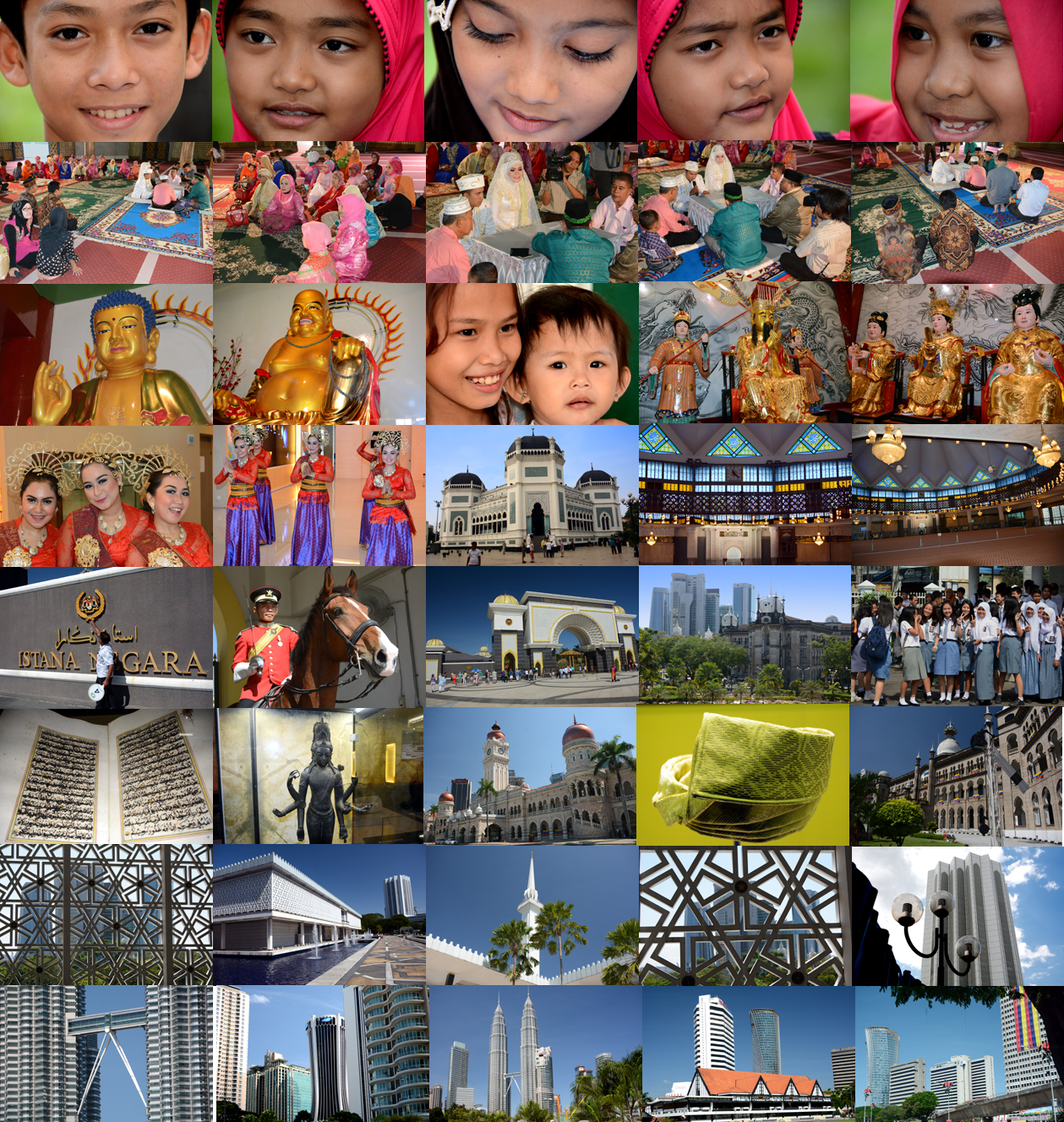
The Grand Mosque Al-Mashun, one of the Sulthan of Deli, remains an historical building and it is still used by Moslems for praying daily and weddings. The Grand Mosque Al-Mashun was built in 1909.
Belawan, Sumatra, Indonesia
Medan City Highlights Excursion:
Visit the highlights of Medan, the capital city of North Sumatra, beginning with a visit to the Sultan Deli Palace, which is also
known as “The Yellow Palace”. A traditional North Sumateran design in yellow (typical for Royal Malay constructions), the palace
is also known Maimoon. A legacy of a Deli Sultanate named Sultan Makmun Al Rasyid Perkasa Alamsyah, the palace was
established in 1888 and became the center of the Deli kingdom.
Just a few hundred yards down the road, visit Mesjid Raya or the Great Mosque. Another of the Sultan of Deli’s legacies, the
mosque was constructed in 1906 and is the largest and most beautiful mosque in Northern Sumatra due to the fact that many of
the building materials were imported from Italy. Used by the Muslim community every day for prayer, the mosque is often busy,
but always beautiful.
The Museum of North Sumatra was built in 1954 and includes some impressive stone carvings from Nias Island. You can also see
weaponry used during the War of Independence and some other pre-historic gems. This is a great place to learn some local
history, and to see some impressive Buddhist statues, as well as 8th century Arabic gravestones.
The next stop is the Chinese Pagoda.This typical temple has a collection of Buddhas, Chinese deities and ancestor tablets. The
air may be filled with the smell of burning incense and the sounds of Buddhists praying.
Port Klang, Malaysia
Classic Kuala Lumpur Excursion:
Your first stop will be The King's Palace, for some great photographs. If you are lucky, you might be able to catch the changing of
the guards. Continue to the National Museum, which was unveiled by the Yang di-Pertuan Agong III Tuanku Syed Al-Haji Ibni
Almarhum Syed Hassan Jamalullail on August 31st, 1963. The Museum is custodian to the historical heritage and culture of the
country. Visit its interesting exhibits on pre-history, Malacca Sultanate, Colonial era and Malaysia Today after 50 years of
Independence.
The next stop is the Independence Square. This is a photographer's dream as this area is the most photographed site in all of
Malaysia. Drive by the "Golden Triangle" the center of business activities in the city. Towering skyscrapers compete for attention
with colonial pre war buildings. After lunch, your next stop will be a photo opportunity at the tallest twin towers in the world: the
Petronas Twin Tower, an architectural wonder and the pride of Malaysia
The final stop will be at Chinatown, the oldest oriental section of the city. Take a stroll through the covered street bazaar of Petaling
Street, which exhibits all kinds of goods, from T-shirts to traditional Chinese herbs. This is a heaven for bargainers and collectors of
"genuine imitations". Central Market, a very short way away from Chinatown is a former "wet market" that has been saved from
being turned into another mega mall and transformed into an art and craft market.
Indonesia
Indonesia is a vast tropical country of sprawling archipelago with extremely diverse culture and demographic make-up with over 300 ethnic groups, and speaking more than 700 living languages. Indonesia has the largest Muslim population in the world. Indonesia also has considerably significant numbers of Christian, Protestant and Catholics population, also Hindu that mostly inhabit the island of Bali, and Buddhist that mostly Chinese Indonesians.
Each of these Indonesian ethnic groups has its own culture and tradition and may speak their own mother language. Each of them may have different religions that have their own rules. These combinations made Indonesia a complex mixture of traditions that may differ from one place to another.
Some ethnic groups such as Javanese have a complex set of etiquette and rather constrained to express their true feeling, while other such as Batak and Betawi people are more open and straightforward.
Most Indonesians uphold harmony, so direct confrontation is best avoided. Yet today in the relatively new atmosphere of democracy, expressing disagreement, performing demonstration, and openly arguing in debate are getting more acceptable in public.
Most Indonesians initiate social contact with a smile, it is a sign that you are approachable.
When interacting with other people, one should avoid expressing negative air of resentment, arrogance or hostility. Smiling, even toward strangers that you are interacting with, or someone that accidentally met your eyes, is considered polite and could be a social ice-breaker and to sign that you are approachable. Probably that is why Indonesians are rated highly as the most smiling people in the world.
Hierarchy and honoring the elder
Indonesians are family and group (community) oriented. Several ethnic group has knit-tight relations that its member are expected to involve actively in many of their community events. Individualism, especially among traditional community is considered arrogance and shunned upon. Politeness as well as respect, modesty and loyalty, is prevalent in the culture. As with most group orientated cultures, hierarchy plays a great role in Indonesian culture. Hierarchical relationships are respected, emphasized and maintained. Respect is usually shown to those with status, power, position, and age. Elders are must be respected through performing salim, for example when shaking the hand with older persons, such as parents, grandparents and teachers, the youngsters are expected to touch the top of the elder's palm with the tip of their nose or forehead to express respect to elders. This salim gesture is similar to how a gentleman kissing the hand of a lady, with exception it is only tip of nose or forehead that touch the hand, not the lips. This can be seen in both the village and families.
The ritualized gesture of paying respect and honoring the elders is the sungkem gesture. It is the utmost gesture of respect in Javanese and Sundanese tradition, mostly performed between parents and children. The parents place their hands on their laps and the children hold their parents hands and bow deep to put their nose in their parents hands, almost placing one's head upon the elder's lap. Ritualized sungkem often performed in wedding or during Hari Raya Eid al Fitr. Senior is expected to make group decisions, although Indonesians are advocates of group discussion and consensus. This ties back to the idea of maintaining strong group cohesiveness and harmonious relationships.
Saving face
Saving one's face means one should carefully consider others' dignity and avoid them experiencing shame or humiliation. Openly airing your displeasure at certain circumstances would be considered extremely disrespectful and bad etiquette. In the event that you are disgruntled or angry with a person, it is best to discuss the matter privately. This way you are allowing them to ‘save face’ and retain their dignity and honor amongst their peers. Openly correcting or pointing out one's mistake in front of other people would cause someone to feel ashamed, and humiliating someone is considered extremely rude.
Everyday Manners
When greeting or introducing oneself, smiling, handshake (salam) and slightly nod is a good gesture. A medium handshake grip is sufficient, since gripping too hard could be considered as rude or an act of aggression, while on the other hand passive 'dead fish' handshake is considered as not interested or unenthusiastic. Salam is also a standard greeting between Muslims, and it would perhaps be considered polite to follow this form of salutation. Generally in Salam, the equivalent of the handshake is to proffer both hands and gently touch your counterpart’s extended hands, before finally bringing one’s hands back to the chest to demonstrate that you welcome from the heart.
Using hands
Both the Muslim and Hindu faiths somewhat abhor the use of the left hand. It is considered as ‘unclean,’ left hand is traditionally perceived as the hand used to clean yourself in the toilet. So when shaking hands, offering a gift, handing or receiving something, eating, pointing or generally touching another person, it is considered proper etiquette to always use your right hand.
Tone
Speaking softly but clearly with a somewhat subdued tone is recommended, while on the other hand speaking too loudly are considered rude. However it is worthy to note that the tone standard is not the same across Indonesia. Javanese, Sundanese and Balinese speak softly, Minang and Malay are medium toned, while people of Batak, Betawi, Bugis and Makassar, Ambonese, Chinese Indonesian and people of Eastern Indonesia speak slightly louder.
Indonesian Cultural Overview
(Courtesy of Terry Greenberg)
“It is different, but it is one”
(Unity in Diversity)
GEOGRAPHY
Most active volcanoes of any country
129 Active volcanoes
Snow-capped mountains in Papua
Ring of Fire
Karakatoa – largest explosive sound in recorded history
Tambora (Sumbawa) 1815 eruption:
“Year without summer”
Top 2,000 meters of mountain blown off
Greatest amount of ash ejected in history
INDONESIAN DEMOCRACY
In April 2014:
190 million voters
Chose:
560 Members of Parliament
2,137 reps to 34 regional parliaments
17,560 reps to 510 district assemblies
Elections have been deemed to be fair, transparent and efficient
Sumatra
Courtesy of Terry Greenberg
Sixth largest island in the world
Until moders times, never governed as a single political unit
“It is different, but it is one.” (Unity in Diversity)