|
|
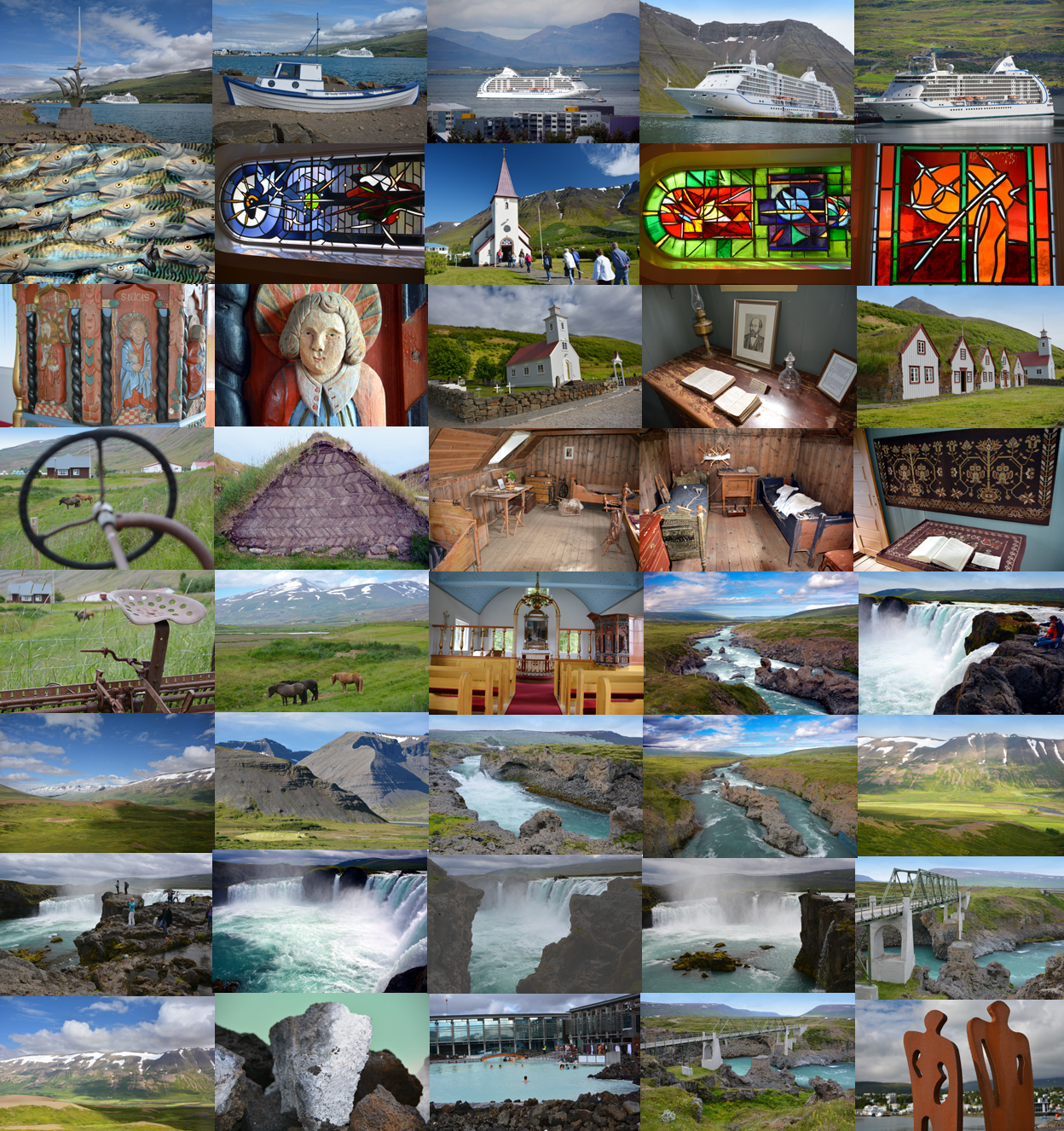
Akureyri, Iceland was developed as a remote Danish trading post in the mid-1500's and is the location of Iceland's longest fjord.
Akureyri, (Capital of the North Iceland), is Iceland's second largest urban area after Reykjavik. It has a population of 17,754 and was settled in the 9th century. The area has a relatively warm climate due to geographical factors and has an ice-free harbor.
The cities' symbol is the modern Lutheran church. The stained glass above the alter was brought to Akureyri from Coventry Cathedral in England during WW II for safe keeping as the rest of the window set was destroyed in an air raid.
Godafoss (waterfall) means "Waterfall of the Gods. The Skjalfandafjot River cascades over a horseshoe-shaped cliff.
"Laufas" - (Turf Farm), or turf-clad timber buildings in Eyjafjorour is located by the estuary of the river Fnjoska in Iceland and dates back to 1910, but stretches back to the Middle Ages. It was last inhabited in 1936, and became part of the National Museum's Historic Buildings Collection in 1948. The Laufas Church was built in 1865.