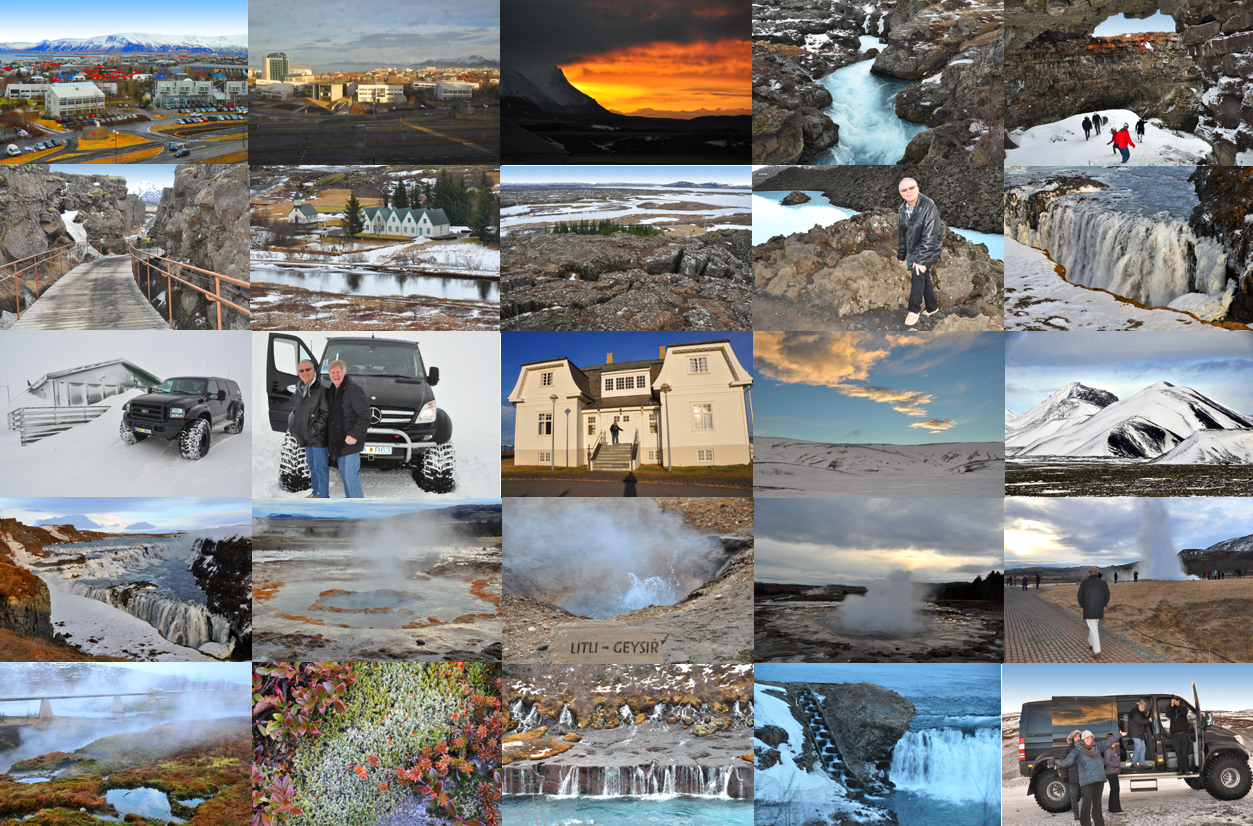
Höfði House has a remarkable history connected to Icelandic relations with other nations. The house was built for the French consul, Jean Paul Brillouin. Designed in Eastern Norway, it was transported to Iceland in kit form for assembly. The building displays features of the Art Nouveau (Jugend) style, classical neo-baroque and Norwegian national romanticism. In the formal reception room, Brillouin’s name is inscribed in gold above the doorway, together with the date of construction, 1909. Among those who visited during World War II were British Prime Minister Winston Churchill and actress Marlene Dietrich. The city of Reykjavik purchased the house in 1958. Since 1967, it has been a reception house for the City government. In October 1986, Höfði House was the setting of the famous summit meeting between Regan and Gorbachev, which was regarded as marking the beginning of the end of the Cold War. When the Baltic nations reclaimed their independence, Iceland was the first nation to recognize it and a declaration to that effect was signed in Höfði House in August 1991. Most foreign heads of state who visit Iceland make their way to Höfði House.
<<>> <<<>>> <<>> Þingvellir is a protected national park, regarded by Icelanders as the shrine of their nationhood. It has been inscribed on the World Heritage List for its cultural and historical significance, its unique, natural environment and its remarkable geology on the boundary of the Eurasian and North American tectonic plates.
As the site of Iceland’s ancient legal and judicial assembly, the Alping Þingvellir embodies Viking age concepts of social structure, law and authority. On these values, the early settlers of Iceland shaped a new society, accompanied by a remarkable flowering of literary culture. Þingvellir contributes to and symbolizes the Icelandic National identity.
Þingvellir is unique in the world. The geology of the region, together with the ecosystem of Þingvellir Lake, Iceland’s largest natural lake, constitutes a valuable whole. The ecosystem of the lake is rich and the catchment area of the lake which is about 1,300 sq. km. Þingvellir lies on the junction of two tectonic plates, on the Mid Atlantic Ridge. The junction of the plates is more clearly visible here than anywhere else in the world; the two plates are constantly diverging, causing fissures and gullies throughout the zone.
The “Gullfoss” Waterfall may have been so named because of its golden evening hue which often colors its glacial water or because of rainbow which often appears when sunshine hits the water-spray thrown up by the waterfall.
<<>> <<<>>> <<>>
• Capital: Reykjavik, which means “smoky bay”, with 120,000 inhabitants.
Fun facts about mysterious, creative, pure, adventurous, sublime, Iceland ……not merely a destination, but an adventure….and “Extreme Experience!”
Iceland is a progressive modern society, founded on old traditions and strong individuality.
Iceland is a photographer’s paradise, rich in awe-inspiring vistas and contrasting, unspoiled nature with clean water and clean energy.
Icelandic, a North Germanic language derived from Old Norse, is considered the world’s most difficult language to learn and speak. There are over 40 different words for "rain." Icelandic language has been virtually unchanged for the past 1000 years. The Vikings who settled Iceland in the ninth and tenth centuries brought with them their language which has remained basically unchanged ever since. Literacy has been widespread ever since the first sagas were written down in the thirteenth century, and people today can still read them without difficulty. Unlike most western cultures, there are no real dialects and the best language tends to be spoken in the countryside rather than the big city. One strange feature of Icelandic is that it refuses to accept foreign words, but almost always coins new words from ancient Viking roots for even the most complex technological concepts. A classic example is the word for computer: tölva, a hybrid formed from old words for number and prophetess. English is widely spoken and understood.
Websites: www.visiticeland.com and www.visitreykjavik.is
Iceland is the most sparsely populated country in Europe.
71.7% of all energy used in Iceland is produced from own resources. 53.9% of all energy needs in Iceland are met by geothermal energy production (hot springs), while 17.8% off all energy needs are met by hydro-electric production, which comes from the big waterfalls.
<> <<<>>> <>
<> <<>> <>
Iceland lies on the Mid-Atlantic Ridge, the mainly underwater border where the tectonic plates of America and Eurasia are slowly spreading apart. A huge rift runs through the country from southwest to northeast, disappearing and surfacing by turns, where the plates are heading in different directions. So although Iceland is geographically and culturally part of Europe, half of it lies on the American plate, and is moving westwards at an estimated 1-2 cm a year. At the ancient parliament site of Thingvellir, which lies on this rift, you can stand on the edge of America (geologically speaking) and see all the way to Europe, 10 km away.
Roughly 85 percent of Iceland’s energy is from renewable resources, and well over half of that is geothermal alone. The most important use for it is heating swimming pools. Iceland has well over 150 public swimming pools, and most of those are kept heated thanks to all-natural volcanic heat.
Life expectancy is 81.3 years for women and 76.4 for men– one of the highest in the world.
The majority of Icelanders believe in elves. These elves usually live in rocky areas, have magical powers, and cause trouble if someone tries to disturb their home. In some cases, bulldozers have been reported to malfunction when trying to work on a supposed elf site. And in Iceland this belief is so important that some people are actually called in to arbitrate with the elves in the hopes of getting them to leave. Certain roads have been re-routed to avoid disturbing areas where elves are thought to live.
Icelandic culture fosters a high level of gender equality and civil rights.
An international study done in 2006 ranked Iceland as the “Fourth Happiest Nation” in the world.
Traditional food
SKYR….Eaten regularly as a snack or with meals, the dairy product Skyr is one of the most popular foods in Iceland. However, despite its popularity within the country, it isn’t well known outside of Iceland.
Skyr is considered by many to be much like yogurt, but it is actually a form of soft cheese and is prized for having a high amount of protein and virtually no fat. Unfortunately, unless you live in Iceland or have a Fresh Market near you, it will probably be difficult to get any of this delicious dairy treat. While there are recipes for it, due to the way it is made with a bacterial culture you need Skyr to make more Skyr. There are substitutes that can be used but the end result won’t be quite the same.
Puffins are small birds with black and white feathers; they have cartoonishly oversize beaks and are absolutely adorable. In Iceland, raw puffin heart is actually considered a delicacy, and puffins are eaten for food all the time.
Most visitors are full of praises for Iceland's ocean-fresh seafood and mouth-watering mountain lamb, but these are only part of the local culinary experience. Traditional food is also served, made using the only preservation methods available when people had to store up for the winter in the days before refrigerators. Some is delicious, some is different, and is very good to boast about to your friends after you've finished it. Meat was commonly smoked, and the delicious hangikjöt (smoked lamb) is still popular today. Among dairy products, a big favourite with visitors is skyr (curds), especially served with fresh bilberries in late summer. On the more adventurous side is slátur, which literally means "slaughter" but is like haggis. And for those with nerves of steel and stomachs of iron, the menu for the Thorri midwinter feast (January/February) is a real challenge. Delicacies there include some quite indelicate cuts of meat, including boiled sheep's head (on the bone or pressed), ram's testicles pickled in whey, and loin bags. But what really sorts the men out from the boys is rotten shark, cured by burying, washed down with a well-deserved shot of Black Death schnapps. Apart from drinking more Coca Cola per capita than anywhere else in the world, Iceland also has a drink all their own that they call Brennivin. This alcoholic beverage has something of a nasty reputation, even among Icelanders. Brennivin is a sort of schnapps distilled from potatoes and uses caraway seeds.
Golf at midnight……During the months of June and July, Iceland has days with a full 24 hours of precious, beautiful sunlight. While you might think of a variety of things you could do with 24 hours of light in a day, a lot of people in Iceland look at it as a splendid time to catch up on their golf. While the weather can get somewhat cold and rainy on occasion, that doesn’t deter the most spirited golfers, who stick it out regardless. Some who have played golf in Iceland during the midnight sun have described the experience as both surreal and sublime. And while golfers may not see much in the way of trees on a typical Icelandic golf course, they may have to deal with unique challenges—such as lava beds and the fury of angry birds that have had their nests disturbed.
The popular Nick, Jr. television show Lazy Town was created and is produced in Iceland and is shown in 98 different countries.
Among OECD nations, Iceland has the highest number of broadband internet connections per capita.
Iceland was the last European country to be settled—sometime during the 9th or 10th centuries when Scandinavian sailors discovered it.
Iceland’s first inhabitants were Irish monks, who regarded the island as a sort of hermitage until the early 9th century.
More than 90% of Icelanders follow Lutheranism.
More than 13% of Iceland is covered by snowfields and glaciers.
Icelanders have unique superstitions such as: “If the first calf born during the winter is white, the winter will be a bad one” and “If you sneeze three times before breaking fast on a Sunday, you will gain something in that week.”
Iceland’s main industry is fishing.
Icelander’s are extremely proud of their Viking heritage and have preserved it in art, music and festivals.
The eccentric pop star Bjork hails from Iceland.
Iceland has one of the longest work weeks in Europe. Icelander’s are renowned for their dedication productivity.
Icelanders value literacy and hold the world record for number of books per capita.
In 1980, Icelanders elected Vigdis Finnbogadottir as the world’s first female head of state.
Trees in Iceland?
Ancient Icelandic writings from the 12th century tell how the settlers three centuries earlier found a country that was covered with trees from mountain to shore. The fact that they mention this point suggests that trees were already becoming scarcer then. Over the centuries they were chopped down for timber and firewood, while grazing sheep, harsh winters and ash from volcanic eruptions caused erosion that prevented trees from taking root. Reforestation work began early this century and although there is still only one proper forest in the country (Hallormstadaskógur in the east), Iceland today plants more trees per head of population than any other nation in the world (around four million a year, or 16 for every man, woman and child.)
Iceland has the most active volcano area in the world, the largest waterfall and glacier in Europe, the northern most botanical garden and golf course in the world, the cleanest capital in the world, a population with the longest life expectancy and had the first democratically elected female president in the world, Mrs. Vigdis Finnbogadottir.
<> <<<>>> <>
Everyone in Iceland is on a first name basis, and people are even listed by first name in the telephone directory. Most Icelanders still use the old Viking patronymics instead of family surnames, with different forms for sons and daughters. For example, a man called Haraldur Magnusson and his wife Helga Jonsdottir might have a son called Petur whose final name would then be Haraldsson, and a daughter called Ingibjörg Haraldsdottir. Logical enough, but the naming system sometimes raises eyebrows at passport control and hotel reception desks when Icelanders travel abroad. In the age of women’s lib, increasing numbers of children are being given matronymics, i.e. identified as the son or daughter of their mother rather than their father. In the telephone book everyone is listed by their first name.
• Name: Island, Nickname: Land of Fire and Ice
• Government: Democracy
• Language: Icelandic, English