Iceland 2012
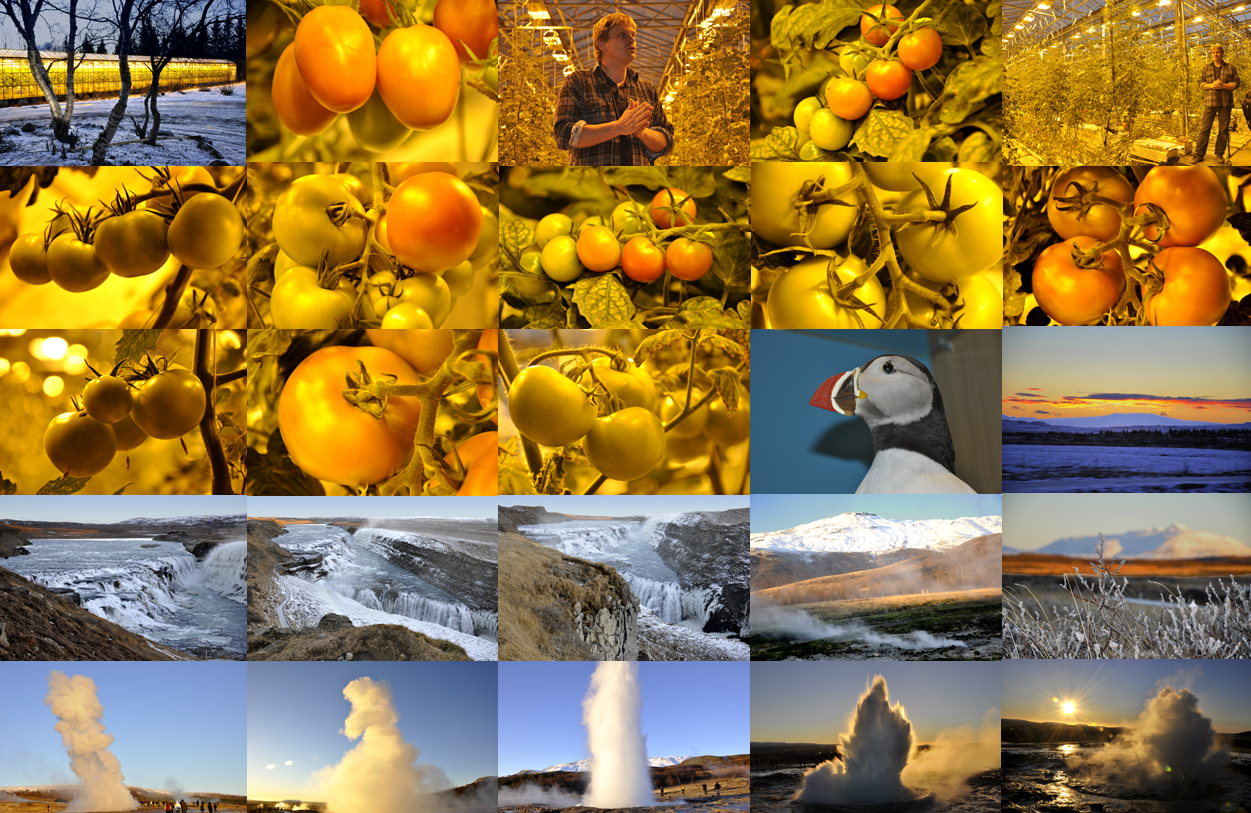
Iceland, the "Land of Fire and Ice"
Iceland is the size of Kentucky with a population of only 320,000, 65% of whom live in Reykjavík.
Language
Icelandic is similar to what the Vikings spoke and most ancient literature can be read by Icelanders. Here are a few extra letters in the Icelandic alphabet: ð æ Æ ö Ö Ð þ. The English word geyser (a spouting hot spring), is derived from geyser … the Icelandic verb geysa, "to gush."
Time Zone ~ Daylight ~ Temperature
Iceland is on Greenwich Mean Time. The least amount of daylight is 4-hours and 7-minutes on December 21st and the greatest amount of daylight is 21-hours on June, 21st. December and January get as cold as 36°F and July and August average 57°F.
History of Iceland
In geological terms, Iceland is a young island. It started to form about 20 million years ago from a series of volcanic eruptions. The first Norwegian settlement dates back to 874AD.
Government
Ðingvellir, (Thingvillir), National Park, home of the oldest existing Parliament in the world dating back to 930AD, the first National Assembly making it the oldest Parliament in the world. Iceland gained its independence from Denmark in 1944.
Brennivin
The Icelandic "Brennivin" a non-sweet cumin schnapps called by the locals, "Black Death" has an herbal-medicinal taste which makes Irish Coffee, I renamed: "Icelandic Coffee."
Northern Lights – The Aurora Borealis
22013 will have the most active Northern Lights of recent times and Iceland is one of the best places in the world to see them.
Volcanoes (and Eyjafjallajökull in particular)
Iceland has the greatest concentration of active volcanoes in the world. Iceland averages one volcanic eruption every five years. Eyjafjallajökull consists of a volcano completely covered by an ice cap. The 2010 eruptions of Eyjafjallajökull were relatively small for volcanic eruptions, but caused enormous disruption to air travel across western and northern Europe over an initial period of six days in April 2010. The eruption was declared officially over in October 2010, when snow on the glacier did not melt. From 14–20 April, ash covered large areas of northern Europe when the volcano erupted. About 20 countries closed their airspace (a condition known as ATC Zero) and it affected over 100,000 travelers.
9 Reasons Volcanoes Are AWESOME!
We’re having some hot volcano action up here with an ongoing fissure eruption at the Holuhraun lava-field north of Vatnajökull Glacier. But we Icelanders have learned to harness the power of our fiery friends. Here are 10 things volcanoes do that are AWESOME:
1. Create breathtaking Lava Tubes & Ice Caves for Exploring
2. Provide clean, renewable geothermal energy to heat homes & businesses
3. Provide geothermal heating for outdoor pools & spas
4. Heat greenhouses that grow organic hothouse tomatoes
5. Heat the ground for geothermal bread-baking
6. Create exciting exploding geysers like Strokkur
7. Form unique lava formations at Lake Myvatn
8. Produce the stunning black sand beaches of Vik
9. Make awesome volcano magma chambers for climbing INSIDE