Galápagos Boobies
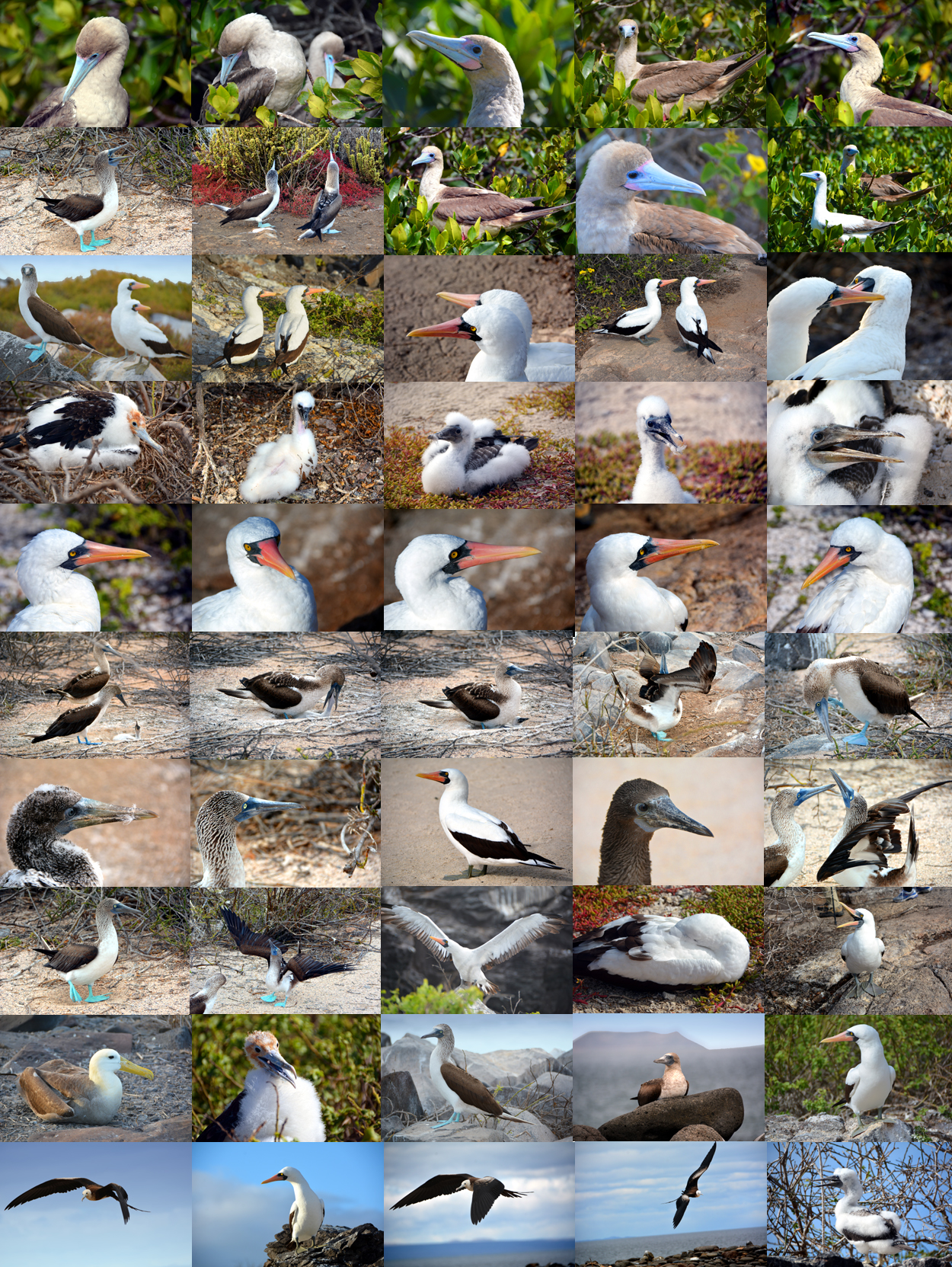
There are six species of boobies in the world. The Galápagosis Islands are home to three of them: The Blue-footed Booby, Red-footed Booby and the Nazca Booby. None of the booby species are endemic to the Galápagos Islands – they are found in other parts of the world.
All three species of Galápagos Boobies are skilled divers. The reason all three species of boobies coexist in the Galápagos Islands is because they have different foraging strategies – thereby eliminating direct competition for food. The Blue-footed Boobies forage close to shore, the Nazca Boobies venture out to the deep oceanic water chasing flying fish.
But all boobies catch their food, (fish and squid), by diving into the ocean from great heights. They start their vertical dive from 33 to 130 feet in the air and hit the water at speeds of up to 62 miles per hours. They use their momentum in conjunction with the poser of their wings to ‘fly’ underwater to depths of of up to 82 feet in pursuit of prey.
They name ‘booby’ was given to these birds by early explorers who thought they birds were comical and ungainly – with their bright colors, clumsy walking abilities and strange antics. The word originates from the Spanish world ‘bobo,’ which means ‘clown.’
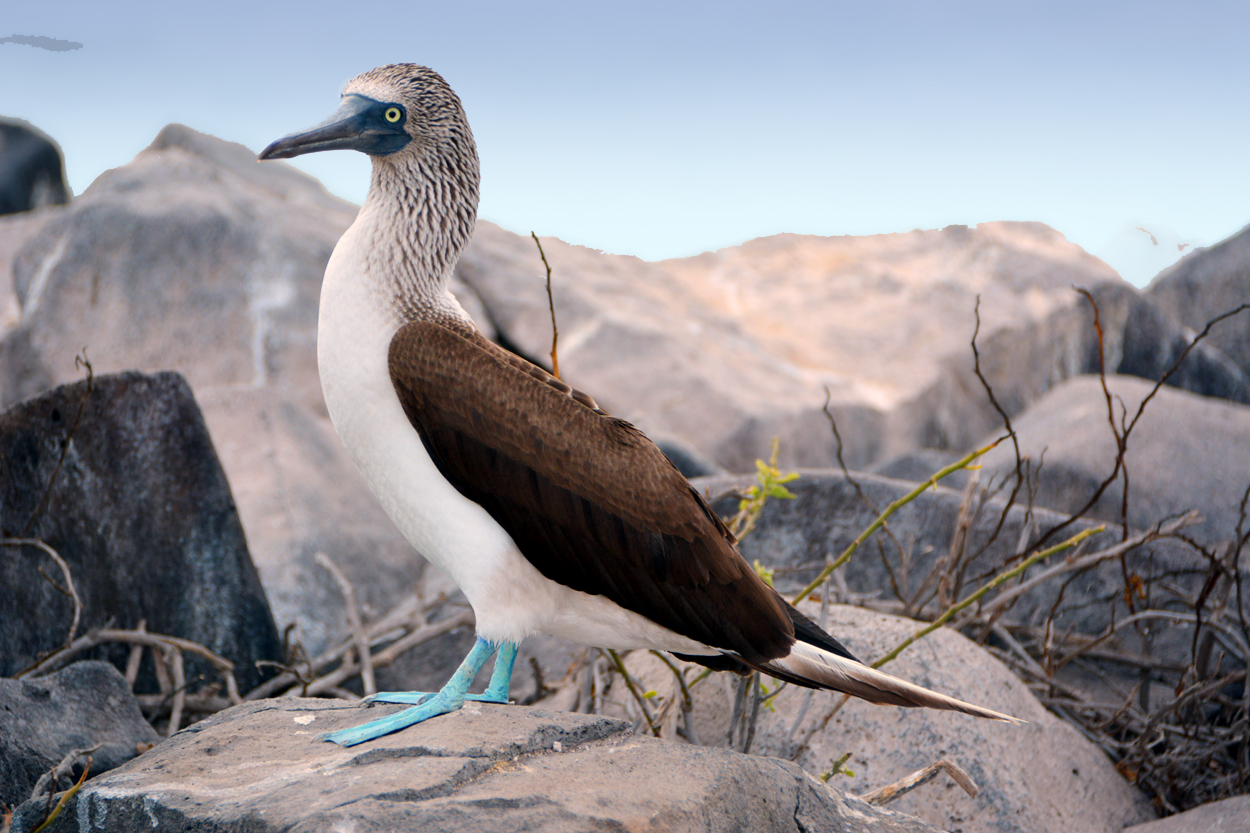
Blue-footed Boobies
The Blue-footed Booby weighs 3.3 pounds, has a wing span of 5 feet and lives 20 years. More than 70% of the world’s blue-footed booby population lives in the Galápagos Islands.
Males and females look nearly identical. However, there are three key differences – their voices, (only the males produce musical whistles, females honk), their eyes, (females have dark rings of pigment around the pupils of their eyes, making them look larger), and their size, (females are larger than males.)
The Blue-footed Boobies are the most noted of the divers – especially with their long tails that help them to steer and to change direction in pursuit of fish. They tend to remain close to shore and feed mainly on sardines and squid.
Red-footed Boobies
The Red-footed Booby weighs 1.8 pounds, has a wing span of 3 feet and lives 30 years. These are the smallest of the boobies in the Galápagos Islands, but the most numerous, with an estimated population of over 130,000 pairs. They are easily recognized by their bright red feed, blue beaks and colorful faces. This species has several colorful morphs, but in the Galápagos Islands, 95% of them have brown plumage. The other 5% have white plumage.
The Red-footed Boobies forage during the day, making long trips of over 55 miles out to sea. They are mainly looking for flying fish and squid. It is amazing to watch these birds glide low and fast over the ocean surface as they chase tiny flying fish and catch them before they splash back into the ocean.
Mating pairs remain together for several seasons. Although not as spectacular as the Blue-footed boobies, the Red-footed boobies also perform and elaborate courtship display that included short dances, the male’s display of his blue throat and harsh squawks.
The Red-footed Boobies are the only ones that build nests in trees and bushes, and they have especially adapted prehensile webbed feet to perch on branches.
They lay only one egg, which is incubated by both adults for 44-46 days. They put all their effort into rearing only one chick.