TERRACOTTA WARRIORS
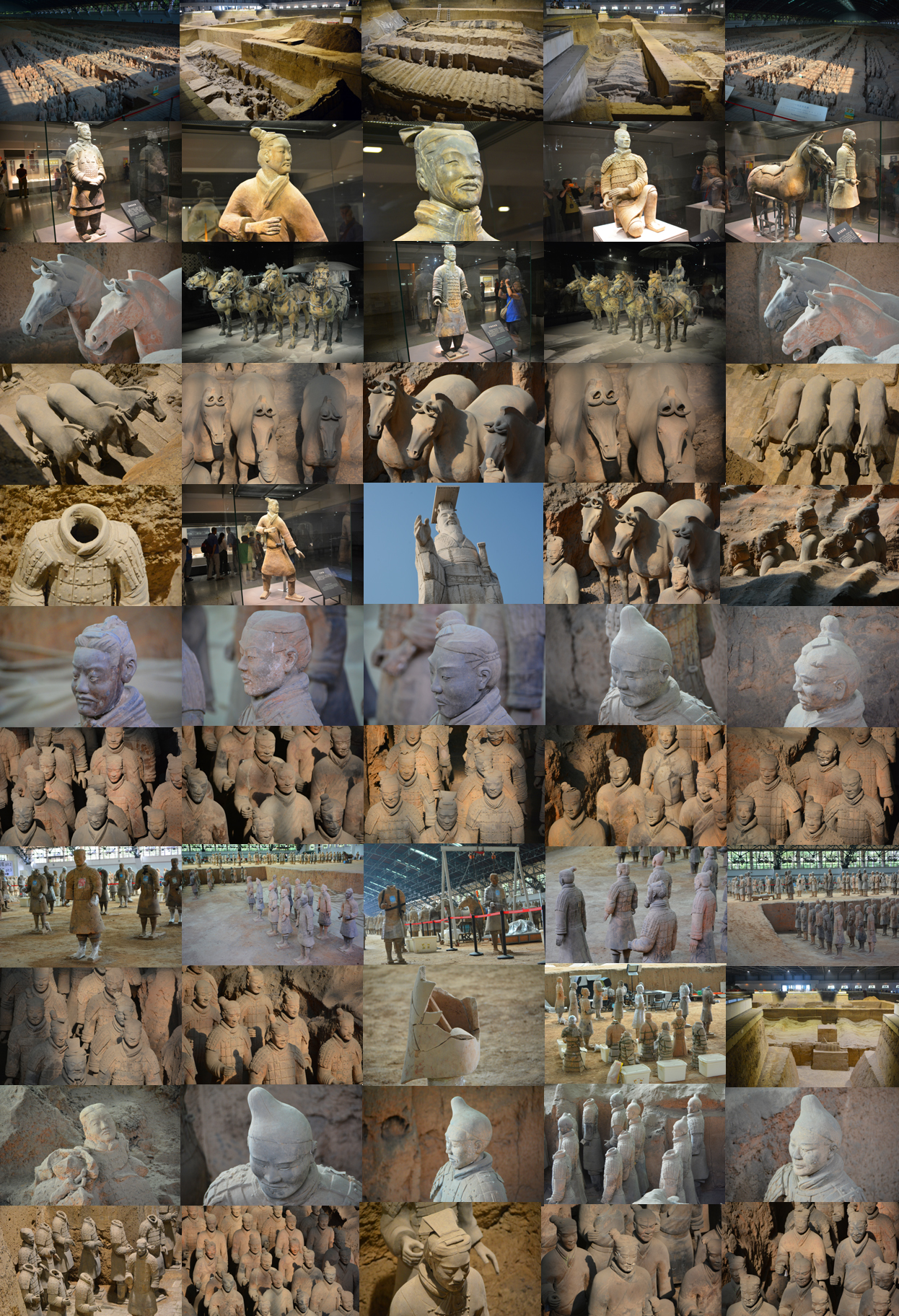
The Terracotta Warriors were discovered by accident in 1974 at Xian, China, when local farmers, digging a well, broke into a pit containing 6,000 terra cotta figures. Excavation in 1976 revealed two further pits, both filled with Terra Cotta Warriors, chariots, and war horses.
On the eastern side of the tomb, a number of small pits have been found containing the bones of horses and smaller-size terra cotta figures with nearly 8,000 figures, recovered.
The Terracotta Army was built to guard the tomb of the first emperor of China, Qin Shi Huang, 2,200 years ago.
Qin Shi Huang instigated the building of the Great Wall of China and is remembered for his obsessive quest for the secret of immortality. The Terracotta Warriors were built to silently guard his tomb for all eternity.
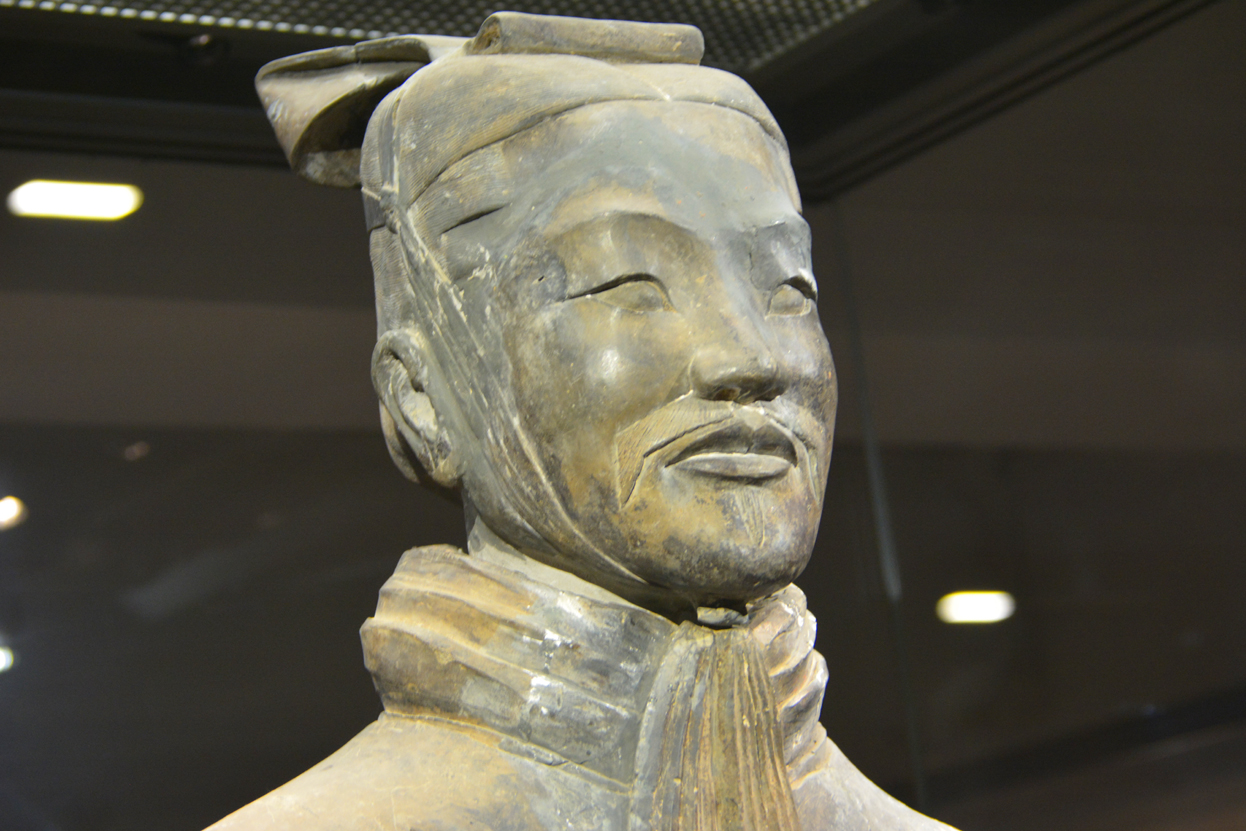
Life-size and individually modeled in clay--from the rivets on the body armor to the thread on the soles of the shoes, every detail has been carefully constructed.
The hands and the heads of the Terracotta Warriors were made separately. Each head is unique with individual features and expressions.
The Terracotta Warriors are regarded as the Eighth Wonder of the World.
The Army Array of Pit 1
Pit 1 is a combined battle formation of charioteers and infantrymen. At the eastern end of the pit there are three rows of vanguards. Immediately behind them is one row of soldiers facing south, north and west, respectively as the flanks guard the sides and rear of the army.
Pit 3
Pit 3 was discovered in June 1976, located north of Pit 1 at the western end. It is 25 meters to the south of Pit 1 and 120 meters to the east of Pit 2. It is a “U”-shape about 520 square meters, measuring 28.8 meters long from east to west, 24.5.4 meters deep. Investigation shows that Pit 3 was destroyed seriously in history. Only 68 pottery figures, one chariot and 34 bronze weapons were unearthed from this pit. Pit 3 is now known as the command center of Pit 1 and Pit 2
The Sculpture of the Terracotta Warriors
All the pottery warriors and horses were made using local clay, then baked in a kiln. After firing the figures were completed with painted detail. The Qin Terracotta Warriors and Horses were in life-size and exquisitely made with ancient high technology.
The Pillars
The remains of the pillars are found on both sides of the partition walls. The pillars were for sustaining crossbeams. The diameter of the pillars is 30 centimeters. an interval of 1.1 meters to 1.5 meters between pillars.
The brick floors were rammed with earth 45 centimeters thick and paved with bricks.
The Pillars
The remains of the pillars are found on both sides of the partition walls. The pillars were for sustaining crossbeams. The diameter of the pillars is 30 centimeters. an interval of 1.1 meters to 1.5 meters between pillars.
The brick floors were rammed with earth 45 centimeters thick and paved with bricks.