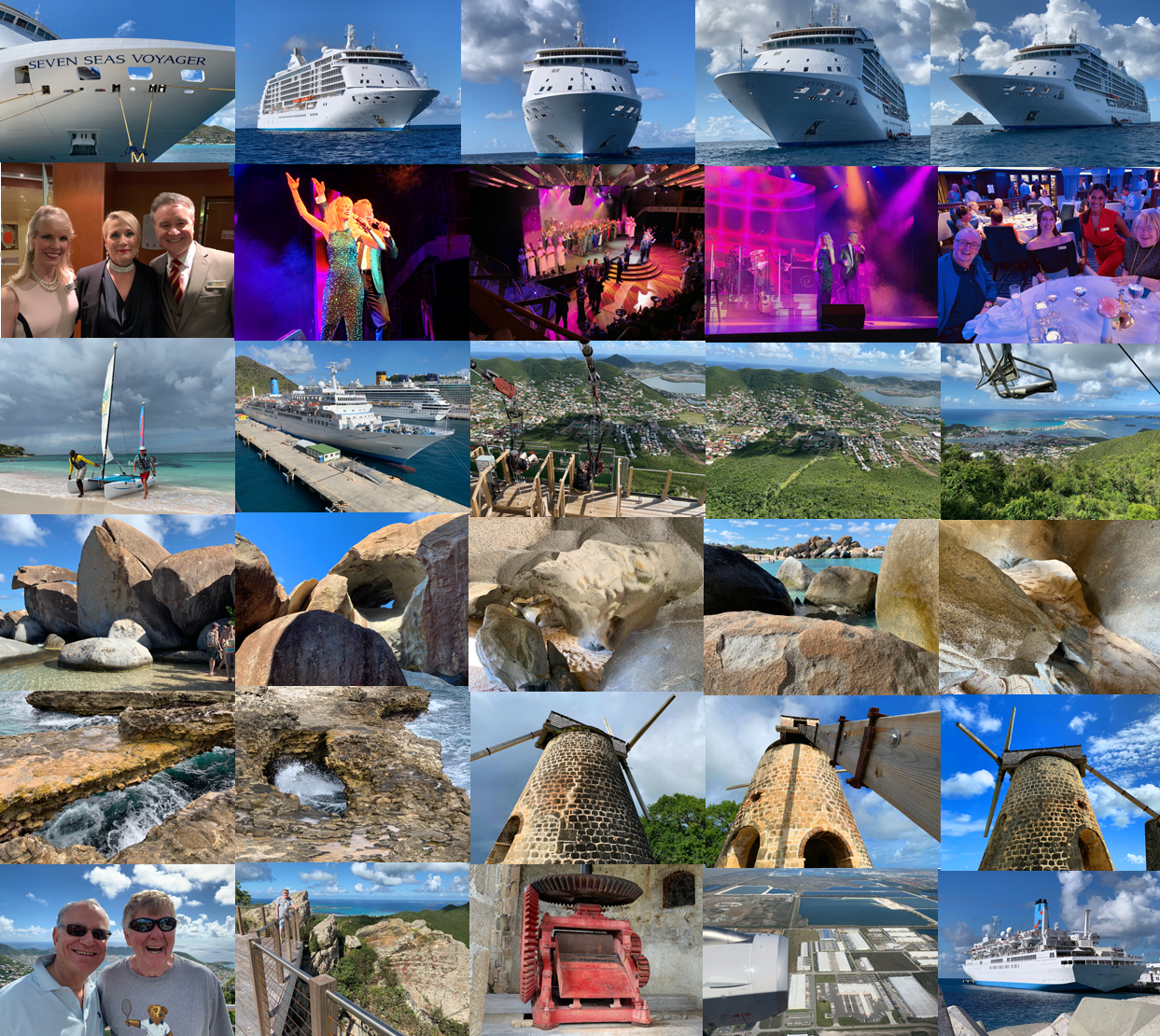
BETTYS HOPE (SUGAR CANE) MILL & PLANTATION, ANTIGUA
Established in the 17th century as the first large-scale sugar plantation in Antigua, Bettys hope operated for almost 300 years. Now restored, the site offers visitors a chance to see and understand the workings of a colonial sugar plantation.
This windmill was built in the 1690's and extensively repaired in 1737. The sugar cane stalks had to be handled twice by two feeders pushing them through one pair of rollers then back for a second pass from the other side. This only extracted about 60% of the juice, was difficult to manage, took more time and required more manpower. The mill floors were much higher as the juice flowed by gravity through a trough or pipe to the boiling house. The rollers provide a double crush in a single pass. Feeder trays reduced the handling process and manpower. This miss is unique and a rare setup as the extracted juice is held in a tank beneath the machinery to be pumped on demand to the boiling house. It took ten men to run this mill.
Devil's Bridge, Antigua and Barbuda
Devil's Bridge is a natural rock arch in eastern Antigua. The area around the arch features several natural blowholes which shoot up water and spray powered by waves from the Atlantic Ocean. This particular location is exposed to waves that are pushed by the Trade Winds with no land between here and Europe.
The limestone arches were formed by seawater erosion and is located at the north-eastern point of Antigua, known as Indian Town Point. The area was legally constituted as a National Park in the 1950's. Within the park there is a remarkable example of sea-water erosion. Geological, Devil's Bridge is a natural arch carved by the sea from soft and hard limestone ledges of the Antigua formation, a geological division of the flat north-eastern part of Antigua. A bridge was created when a soft part of the limestone eroded away by action of Atlantic breakers over countless centuries.
On the east coast of the island is the famous Devil's Bridge. Devil's Bridge was call so because a lot of slaves from the neighboring estates use to go there and throw themselves overboard. That was an area of mass suicide, so people use to say the Devil have to be there. The waters around Devil's Bridge is always rough and anyone fall over the bridge never come out alive." Sammy Smith, a 104 year old Antiguan patriot had the answer. From his memoirs: "To shoot Hard Labour."
The Baths, (Virgin Gorda)
Enjoy wading through the colorful coves and granite boulders of The Baths in Virgin Gorda. The massive smooth ash gray boulders of varying sizes rise from the sea's crystalline waters; a virtual maze for to wade or swim through. Climbing through the crevices and grottoes of The Baths isn't terribly intensive, but the granite boulders can be slippery.
The dramatic shape of The British Virgin Islands' third largest island, Virgin Gorda, (8-1/2 square miles), reminded Christopher Columbus of a reclining woman, or Fat Virgin, inspiring its name.
Evidence of the rich heritage of African, Indian and Spanish history is plentiful, from the Spanish ruins at Little Fort National Park to the Cornish Copper Mines, where the ruins are set against the azure sea at the island's southwestern tip. This eclectic influence extends to Virgin Gorda's local cuisine, shops, arts, fashion and gifts. The Baths are located at the bottom of a hill on the southern end of Virgin Gorda.