Angkor Wat
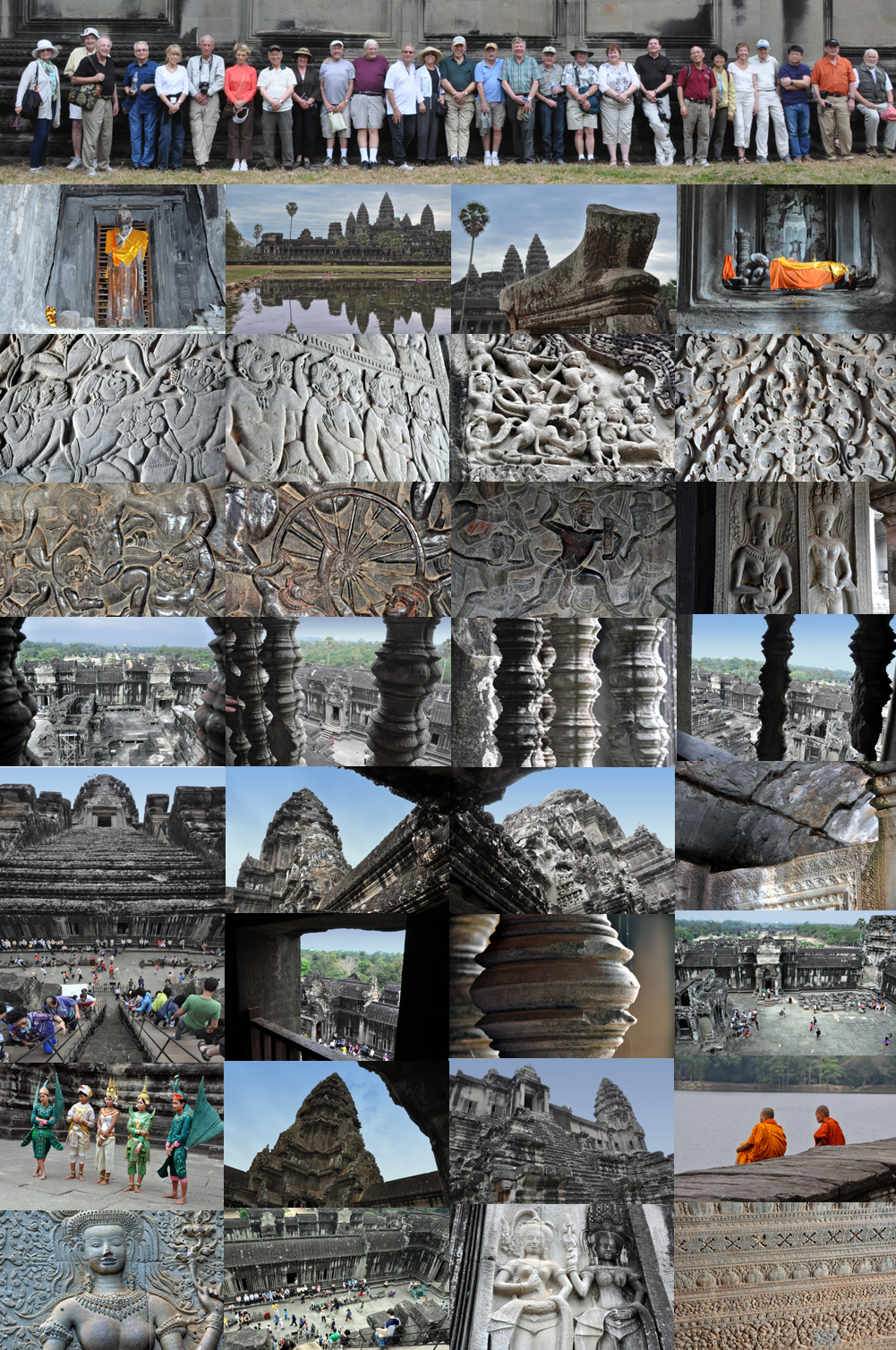
Angkor Wat
The name Angkor is Khmer form of the Sanskrit word "nagara," which means "city."� It occurs in a number of modern Cambodian place names, such as Angkor Borei, which is south of Phnom Penh. In Siem Reap area northeast of the Great Lake, (Tonle Sap), it is used in particular to denote the complexes of Angkor Wat, "the temple city," and of Angkor Thom, "the great city."
Angkor is widely acknowledged to be one of the key works in our human heritage, yet most people know very little about it, and only the name of one small part of this vast site, Angkor Wat, has a familiar ring. Yet this area of ruins, covering more than 20,000 hectares, represents five centuries of the history and civilization of the Khmer people.
Since the rediscovery of the lost city of Angkor deep in the jungles of Cambodia in 1860's it has been seen as one of those magical places that all travelers dream of visiting one day. A vast site, comprising temples, palaces, reservoirs and canals, it was the spiritual and political heart of the once-mighty Khmer kingdom.
During the turbulent history of Angkor (from the 9th to the 16th century AD) one "king-of-kings"� succeeded another against a backdrop of wars and revolts and yet they managed to conceive and build monumental architectural projects of great daring and imagination.
Deep in the Cambodian jungles, nearly overgrown by vegetation, the 116 square mile plains of Angkor bear witness to an ancient civilization. Reaching back to the beginning of the 8th century, the cities and temples of Angkor flourished until the 16th century. During Angkor’s history, seven capital cities rose and fell in violent succession. Today, they have almost disappeared.
Toward the end of the 12th century, King Jayavarman VII succeeded in establishing peace for the region. Protected by think walls, the king and his followers erected numerous holy temples, only to have them vanquished and abandoned by the end of the 15th century. By the middle of the 19th Century, Angkor had nearly faded from memory. It wasn’t until explorers stumbled upon these hidden ruins and started uncovering the historical Khmer legacy that interest in the region was revived.
With painstaking attention to details, archeologists began to reconstruct the astonishing history of Angkor.
Khmer civilization remained essentially unchanged from the time when its major temples were built, between the 9th and the 14th centuries, to the end of the 19th century. The innumerable temples built to honor gods imported from India were meant to ensure prosperity in this world and happiness in the next. Local Spirits watched over everyday life.
Now, new rescue work is being undertaken. All Cambodians, whatever their political color, acknowledge Angkor as the most potent symbol of their culture.