Ultra-Luxury

6-Stars ~ 7-Days

“Le  Cordon  Bleu   of  Paris”

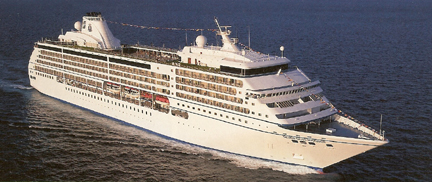
490 Passenger  ~   Regent Seven Seas Cruises   m.s. “Navigator”

INCLUDED: FREE AIR From Most Major US Gateway Cities

INCLUDED:  Your  Gratuities,   Fine  Wines,   Premium  Spirits

Unlimited Shore Excursions,   $375 Per Person Shipboard Credit

Exciting Ports of Call

Day Date Port     Arrive     Depart
Wednesday July 31 Anchorage, (Seward), Alaska      5:00 P.M.
Thursday August 1 Cruising Hubbard glacier      ~ ~ ~ ~ ~ ~      ~ ~ ~ ~ ~ ~
Friday August 2 Sitka, Alaska      9:00 A.M.      6:00 P.M.
Saturday August 3 Cruising Tracy Arm      ~ ~ ~ ~ ~ ~       ~ ~ ~ ~ ~ ~
Saturday August 3 Juneau, Alaska      1:00 P.M.      11:00 P.M.
Sunday August 4 Skagway, Alaska      7:00 A.M.      3:00 P.M.
Monday August 5 Ketchikan, Alaska      12:00 P.M.      6:00 P.M.
Tuesday August 6 Cruising The Inside Passage       ~ ~ ~ ~ ~ ~       ~ ~ ~ ~ ~ ~
Wednesday August 7 Vancouver, Canada      7:00 A.M.


Cat.  Stateroom                 Double
MS Master Suite ~ ~ ~ ~ $16,999
GS Grand Suite ~ ~ ~ ~ ~ $13,699
NS Navigator Suite ~ ~ ~ ~$9,699
 A  Penthouse Suite ~ ~ ~ ~$7,799
 B  Penthouse Suite ~ ~ ~ ~$7,599
 C  Penthouse Suite ~ ~ ~ ~$7,399
 D  Deluxe Balcony Suite ~ $7,099
 E  Deluxe Balcony Suite ~ $6,799
 F  Deluxe Balcony Suite ~ $6,499
 G  Deluxe Balcony Suite ~ $5,699
 H  Deluxe Balcony Suite ~ $5,299


Rates & itinerary are subject to change

Tom Taffel   415.566.7673   Tom@TomTaffel.com


Regent's m/v Navigator features the famed Le Cordon Bleu of Paris cuisine. Catering to only 490 guests, she is one of the most spacious cruise ships afloat, and, her staff to guest ratio of 1 to 1.6 provides the highest level of personal service in the six-star tradition of Radisson, (now Regent) Seven Seas.

All suites feature European king-size beds convertible to twins, a separate sitting area and marble-appointed bathroom with full bathtub.

INCLUDED: FREE AIR from most US cities plus your gratuities and complimentary, exquisite dinner wines. There's no additional charge for "Le Condon Bleu of Paris" cuisine.


Our Ports Of Call


Cruising to Alaska, 'The Last Frontier' with its
astonishing abundance of over 3,000,000 lakes, 3,000 rivers
1,800 islands and more than 100,000 glaciers, is more than an overwhelming
experience. Her staggering beauty naturally transforms you and remains in your heart ~ forever

Tom Taffel,  1978


South Central Alaska in general is seismically active. Nearly 7% of the world's annual earthquake energy originates in the Alaska seismic zone, placing the Cook Inlet region seismic risk zone 4. This is the highest risk zone, defined as areas where major structural damage will occur. In 1964, this century's second strongest earthquake shook South Central Alaska at a Richter Scale magnitude of 9.2. The epicenter was located in Unakwik Inlet in Prince William Sound, less than 64 kilometers (40 miles) northeast of Whittier.

The predominant tree cover in the area is Sitka Spruce (80%) and Western Hemlock. Common dimensions of the trees are 14 inches or more in diameter and heights to 55 feet. Growth rates for trees in the fjords of Prince William Sound are very slow. Many trees in these areas take 50 years to reach a significant size. Regeneration is a slow (and haphazard) process on the steep slopes in the area. Scrub alder, blueberry and salmonberry bushes grow in the delta area, particularly where land has been cleared. Whittier is noted for the abundance and size of its berry crop, which attracts an increasing number of berry pickers each year.

Migratory birds such as geese, ducks and cranes use Portage Pass in crossing the Coast Range between Prince William Sound and Western Alaska. Some waterfowl, however, remain in the Whittier area year-round. A large rookery on the north side of Passage Canal contains numerous birds including gulls and kittiwakes. The kittiwake rookery has about 6,000 breeding Black-legged kittiwakes, 20-30 Glaucous-winged Gulls and 10 to 20 Pigeon Guillemonts. Although this is the largest Kittiwake colony in the sound, it is small by Alaska standards. Colonies in the Gulf of Alaska and Pribilofs number 50,000 to 200,000 kittiwakes.

This rookery is very accessible and visited by tourist ships and some recreational boaters, and the colony is in fact the most visited seabird colony in Alaska. The Bald Eagle is common to the area and Rufous humming birds, once thought not to travel as far north as Whittier, are summer visitors.


Hubbard Glacier - A wonder of nature, Hubbard Glacier is a three-story, towering wall of translucent blue ice.   As we cruise up to Hubbard Glacier, a park ranger and naturalist will narrate this spectacular national park and preserve as we cruise up to monumental glaciers calving and forming icebergs that bob to the surface.  Here you will see one of the most active glaciers in the world.   You may see breaching humpback whales, sea otters, sea otters, porpoises, dolphins and harbor seals, brown bears, tufted puffins and bald eagles.  Remember, Alaska has over 98% of the world's bear population!  Alaska's bird habitat includes homes of 445 documented species.  Alaska is home to gray whales, humpback whales, orcas (killer whales) and white beluga whales. Surfacing whales blow geysers of shrimpy, fishy-smelling bad breath into the air.


Sitka - Long before San Francisco came in to its own, Sitka reigned as the cultural capital of the west.   Situated at the base of a conical volcano, majestic Sitka, once the Russian capital of what is now Alaska, is a unique blend of Tlingit Indian culture and Russian history.  Sitka's most famous landmark is St. Michael's (onion-domed) Russian Church.  Sitka is home of the famous Bald Eagle Raptor Center.  The dark primordial forests are dense and rich, receiving enormous amounts of rain so do bring an umbrella, just in case.


Skagway - is without a doubt one of the most colorful towns you're likely to visit anywhere.  Born in the days of the 1898 Klondike Gold Rush, it was a wild town of over 20,000 populated by prospectors, gamblers, thieves and criminals of every type.  Still the "Gateway to the Klondike," only 800 people live in Skagway at the present time.  Most ships that pull into dock at the southern end of town carry more people in passengers and crew than live in Skagway.   Sightseeing in Skagway is remarkably easy because the entire town is five blocks wide and about 25 blocks long.  The White Pass Railway is one 17th engineering wonder of the world and also one of the oldest narrow-gauge railroads in existence.


Ketchikan - The Salmon Capital of the World, Ketchikan is also Alaska's First City (geographically) and is built on trestles, docks and pilings at the water's edge and is the ancestral home of Alaska's Tlingit Indians.   The largest collection of totem poles in the world is on display here.   Nature buffs will appreciate the lush rain forests and the Misty Fjords National Monument.   Ketchikan receives 12.5 feet of rain per year.   Explore historic Creek Street, now a haven for art galleries and boutiques.


Cruising The Inside Passage - is visualized by the inexperienced traveler as the waterway alongside the southern Alaskan panhandle.     It extends for approximately 950 miles from SCENIC British Columbia, to Skagway, Alaska and serves as a busy year-round shipping lane.   The passage is protected by a series of islands large and small.   These islands afford two advantages for the traveler.  First, rough seas associated with ocean travel are an extreme rarity.   Second, you never lose sight of land, which means there is always something to see as you cruise through a maze of bays, straits, and fjords amongst a panorama of waterfalls, forests and glaciers.   Your onboard naturalist narrates as you cruise.


Vancouver, British Columbia - in a physical setting that matches and probably exceeds that of Seattle, Vancouver is the third largest city in Canada.   On a fjord called the Burrard Inlet, it is edged to the north and east by perpetually snow-capped mountains.  The downtown area is on a small piece of land that juts out into the inlet.  It's a city of parks and year-round flowers due to the mild and wet climate.  Most downtown attractions are close to one another, but a modern light-rail rapid-transit system will also be of help in getting around town.  You will be able to explore Vancouver, British Columbia, Canada from its late-Victorian era Gastown to its postmodern glass cathedrals.  Stanley Park offers beautiful views of downtown Vancouver, the North Shore and the mountains.   Victoria is also the home of the second-largest Chinatown in North America.


(Nearby ~ Victoria, British Columbia) - with its delightful combination of British and Pacific Northwest flavors, has been charming visitors for centuries.   With thousands of interesting things to do year-round, it is no surprise that Victoria was rated the number one destination choice in Canada by Conde Naste Traveler Magazine.   Romantic gardens, afternoon tea, the wild beauty of the Pacific coast, a lively arts/entertainment scene and a history full of fascinating tales and colorful people make this, the capital of British Columbia, an unforgettable experience for visitors.

This intimate, sophisticated seaside City is the vacation capital of Canada and the premier tourist spot in the Pacific Northwest.   Victoria is situated on the southern tip of Vancouver Island and sparkles in one of Canada's mildest climates.  This area is the sunniest spot in the province and the gentlest in the country in terms of climate environment and lifestyle.   Victoria's unique character is deeply rooted in its 150-year history and known for breathtaking beautiful (35-acre) Butchart Gardens and the grand Empress Hotel.  The city's British colonial heritage is still very much in evidence, but contemporary Victoria has a distinctly Pacific northwest flavor.  Today, Victoria is best known as the capital city of British Columbia, and is a world-renowned tourism destination.


You can't prepare yourself to experience the most majestic scenery on earth.
But the expectation of experiencing Alaska's pristine beauty and
unbounded grandeur is all the preparation you need.

Tom Taffel,  1978


Optional  Land  Programs

Discovering Denali National Park

4-night program, offered in conjunction with embarkation.

Follow the scenic Parks Highway from Anchorage to Denali where everything is big; the scenery, the mountains and the beauty.   Explore Denali National Park in search for wildlife, ride aboard the world-famous Alaska Railroad, and visit Mt. Alyeska with its spectacular panoramas of seven glaciers.


INCLUDED:

One night at The Hilton Hotel~Anchorage
Two  nights  at  The  Grande  Denali  Hotel
One night at The Alyeska Resort,   Girdwood
One dinner, one lunch and three snack box lunches
One reception & lecture on Denali Alaska Railroad tour
Tours and sightseeing as per program
Fully escorted airport transfers
Escorted tour gratuities
Full breakfast (daily)


Discover Denali ~ 4 Night program, offered in conjunction with disembarkation


Daily Details

Day 1
After disembarking your cruise ship, you will meet your tour director and begin your drive to Girdwood. The road linking Seward to Anchorage passes through some of the most spectacular scenery in the country and holds triple designation: USDA Forest Service Scenic Byway, Alaska Scenic Byway, and All-American Road. After arriving at the Alyeska Prince Resort, take a ride to the top of Mt. Alyeska on the aerial tramway for a spectacular view of the surrounding area with its seven glaciers. A snack lunch will be included. The rest of the day and evening are at your leisure. Overnight at the Alyeska Prince Resort, Girdwood.


Day 2
After breakfast at the hotel, begin your day's tour from Alyeska to Denali on the Parks Highway. Stop at the Iditarod Sled Dog Headquarters and learn about this truly Alaskan competition. From Anchorage to Nome on the Bering Sea coast, each team of 12 to 16 dogs and their musher cover 1,150 miles in 10 to 17 days over the roughest, terrain Alaska has to offer. Over jagged mountain ranges, frozen river, dense forest, desolate tundra and miles of windswept coast, the mushers and their dog teams race. Add temperatures far below zero, winds that cause complete loss of visibility, the hazards of overflow, long hours of darkness, and you have the Iditarod, the last Great Race on Earth. Enjoy a picnic boxed lunch en-route to the great park. Arrive early evening at the Grande Denali Hotel. Dinner and a lecture on Denali are at the resort. Overnight at the Grande Denali Hotel, Denali Park.


Day 3
After an early breakfast at the hotel, pack the camera for the six to eight hour Tundra Wilderness Tour deep into the heart of Denali Park in search of wildlife. The tour is operated by the Denali National Park concessionaire in assigned school buses. Keep your eyes open for moose, sheep, caribou and grizzly bear. The trip is fully narrated and makes frequent stops for photos and restroom breaks. A snack box lunch is included on the bus. Upon returning to the hotel mid-afternoon, enjoy the rest of the day and evening at leisure for optional activities. Overnight at the Grande Denali Hotel, Denali Park.


Day 4
After breakfast at the resort, enjoy a morning at leisure. In the afternoon, ride on the world famous Alaska Railroad from Denali to Talkeetna (4.5 hours) along the Susitna River, and enjoy your lunch on board. After disembarking the train, begin your three hour scenic tour from Talkeetna to Anchorage via the George Parks Highway, linking the state's two largest cities, Anchorage and Fairbanks, with Denali National Park and Preserve. The George Parks Highway travels through the kind of scenery that defines the Alaskan interior: tundra and muskeg, the continent's highest peaks, glaciers, forests, wild rivers, and vast expanses inhabited only by moose, grizzlies, foxes, wolves, and a wealth of birds. Upon arrival in Anchorage, check-in at the Hilton Hotel. The evening is at your leisure. Overnight at the Hilton Hotel, Anchorage.


Day 5
After breakfast at the hotel, transfer to the Anchorage airport for your flight home.


Program Includes

One night at Hilton Hotel, Anchorage.  Two nights at Grande Denali Hotel.  One night at Alyeska Resort, Girdwood.  One dinner, one lunch and three snack box lunches.  One reception and lecture on Denali Alaska Railroad tour.  Tours and sightseeing as per program.  Full breakfast daily.  Fully Escorted Airport transfers as applicable.  The official hotel check-in time is 3 p.m. and check-out is 11 a.m.  Your hotel stay includes room, tax, service charges and luggage handling (where applicable).  Meals as per program.


HOTELS & LODGES
The best available hotels and lodges in Alaska are used throughout the land program. The hotels and lodges are comfortable and rustic. Guests accustomed to the level of services at an international five-star hotel will find that the same services are not available in Alaska. Due to peak season in Alaska between May - September it may be difficult to change rooms during the hotel stay as all hotels have very high occupancy. Hotels are subject to change. MEALS Land programs include full breakfast daily. Room service is not available at most hotels and lodges in Alaska, and is not included. As many tour departure times are at the same time for all visitors in popular areas (ex. at hotels in Denali), there may be times that restaurants are crowded and some waiting time is expected. Some snack-box meals are included during touring.


TRAINS & MOTOR COACHES
The Alaska Railroad was completed in 1923 and stretches from Seward in the south via Anchorage and Denali to Fairbanks in the interior Alaska, a distance of 470 miles. Some of RSSC's land packages include travel on board the historic Alaska Railroad. Regent Seven Seas Cruises uses the Gold Star Dome cars which are equipped with restrooms, and semi-reclining seats with ample room to stretch out. All seats are forward facing, and on the upper level with large picture windows and overhead dome windows. Seats are assigned for the duration of the trip. An open air observation platform is available off the upper level as well. This platform is on a first come basis. The downstairs level is reserved for guests wishing sit down menu service. This dining is not included in the cost of the program and is at guest's expense. Track conditions and other rail traffic may result in variations from the published schedule. Reservations for limited wheelchair seating are strictly required in advance. Most of your land program includes travel on board modern motor-coaches. Due to the vast size of Alaska, the lack of four lane highways outside of major cities, and the distance between sights (Anchorage and Denali is 260 miles), this tour requires lengthy periods on the motor coach. This can be an opportunity to spot wildlife and to enjoy the scenery and the mountains which is what people come to Alaska for. The knowledgeable driver and guide will offer tour highlights along the route, and ample photo and restroom stops will be made. The Wilderness Tour in Denali National Park is operated by the National Park Department. The form of transportation used is school buses arranged by the park department. Guides are members of the Park Department and are assigned on a rotating basis. The regular box lunch served on the bus is also arranged by the park service. RSSC and its local operators have no authority over the vehicles, guides or box lunches served. You will be given an additional snack box to supplement the National Park Department's lunch. The tour will last, on average, seven hours. Due to weather and/or wildlife sightings, this time may vary at the park department's discretion, and is out of the control of RSSC and its local operator.


ADDITIONAL TOURING
While in the Denali area, additional touring programs will be made available for sale. The optional tours available during your program will be presented to you by your tour guide at the beginning of your tour program. Your guide will also assist you with any questions about the tours, and in purchasing them. These tour options vary from week to week and therefore can not be pre-purchased. Your guide will do everything in their power to help you secure space.


ESCORTED TOURS
Your tour is fully escorted. An experienced, knowledgeable tour director will personally guide you on your tour, taking care of all details. The tour director can assist you with reservations for optional tours etc. A welcome letter with additional information will be provided. Gratuities to the tour director and driver should be rendered on a voluntary and personal basis. We like to think this item is a direct reflection on the level and quality service that you have received. Many guests have requested a tipping guideline. We suggest $10.00 USD per person per day for the tour director. We suggest $5.00 USD per person per day for the driver. All tipping is considered to be a matter of individual preferences and is always voluntary.


BAGGAGE
As your baggage will travel on many different modes of transportation, please choose sturdy cases that have been properly tagged with personal identifications both inside and out. It is important to remember to keep all valuables and documents on your person. As amenities such as elevators and baggage handling are limited at some locations in Alaska, we suggest you only carry one bag per person while on the land tour. Your Tour Director will arrange to ship the rest of your luggage on to your cruise ship. The current luggage allowance for commercial flights in Alaska is 44 lbs. It is the guest's responsibility to verify weight limits as excess luggage fees will be at the guest's expense. Guests can make arrangements to have their luggage transported from their home to the ship, and back home from any port at the end of their cruise, by contacting Luggage Free at 800-361-6871or www.luggagefree.com.


CLOTHING AND CLIMATE
With a broad variety of weather possibilities, we encourage you to bring clothes that are suited to layering. Daytime attire in Alaska is strictly casual. Comfortable, supportive walking shoes are a must. The following items should be included: Water-repellant coat or jacket, collapsible umbrella, rain hat, lightweight windbreaker, and sweaters. It could be warmer inland Alaska, and the temperature in Denali can reach 80 degrees Fahrenheit on nice summer days.


ALTITUDE
Travel in Alaska is generally at lower elevations. The maximum altitude is 2,800 in Denali National Park.


MORE ABOUT DENALI PARK
Wild and primitive Denali National Park encompasses about 9500 square miles (approximately 6 million acres). It derives its name from the native name for Mount McKinley, the tallest mountain in North America, (Denali - "the high one"). The Park is located about 240 miles north of Anchorage and 120 mile south of Fairbanks. The 95-mile Park Road runs from the front gate to the small area of Kantishna, that was once a mining town. As it is the only road in the park, it is a limited access road, and beyond mile marker 14, you will need to be on a bus, a bicycle or your own two feet. (Private cars are only allowed during four days in the fall, and they are limited by a lottery.) Those visitors arriving without tour bus reservations may experience a one to two day wait for an available bus. This is especially true during peak season. All RSSC tour programs include pre-reserved bus reservations. Buses are operated by the park department and are not exclusive to RSSC guests. The park tour can take anywhere from five to seven hours based on weather, traffic and wildlife sightings. Wildlife sightings can never be guaranteed. When wildlife is sighted, it may be up close near the park road, across a valley, or in the case of dall sheep on a distant peak. The buses and guests do not leave the park road. Some 175 species of birds and 37 species of animals call Denali National Park home. Dall sheep, relatives of the bighorn sheep, graze the alpine tundra for the young shoots. Ewes and rams live apart in summer, while the lambs are getting their start. In early summer sheep are at lower elevations, but they will follow the snowmelt higher and higher as summer progresses. Caribou, like the dall sheep, travel in groups. Caribou migrate great distances from their calving grounds south of the Alaska Range and northwest of Mount McKinley to their winter range in the northern reaches of the park and preserve. Moose, the deer family's largest member, are not herd animals. Bulls may group in threes or fours or wander alone until they pursue several cow moose during the rut, or mating season. The calves are born in May and will stay with the cow one or two years. A cow moose can be very dangerous while protecting her calf from a perceived threat. Wolves are rarely seen, but they plan an important role in the nature scheme. The presence of wolves in Denali is an indication of the quality of this wilderness. If you are lucky enough to see a wolf, consider it a rare and privileged experience. Grizzly bears are omnivores, eating small plants, berries, ground squirrels, moose or caribou calves, and occasional carrion. They are seen throughout the park. Sows generally bear two cubs, sometimes one and rarely three. They too are fiercely protective of their offspring. Smaller mammals abound within the limits of this harsh, northern environment: fox, weasel, wolverine, lynx, marten, snowshoe hare, hoary marmot, red squirrel, ground squirrel, pika, porcupine, beaver, shrew, vole and the lemming.


WEATHER CONDITIONS
Weather conditions are unpredictable. While RSSC and its appointed ground operators will do all they can to assist with alternative arrangements, we cannot be held responsible for any costs incurred if a land program, tour or private arrangement made through RSSC is disrupted due to adverse weather conditions. The RegentCare Guest Travel Protection Program provides coverage for excessive delays, if due to inclement weather, strikes or equipment failure of a common air carrier. To obtain this coverage, the premium must be paid in full at the time your final payment is made.


GENERAL INFORMATION
The published itinerary is based on components suppliers expected to be operating for the land program. Changes to availability of flights, flight and tour schedules or other itinerary components out of RSSC's control may require an adjustment to the final itinerary. The local ground operator will handle any meal vouchers, train tickets, or tour tickets included in the program. RSSC reserves the right to substitute hotels if necessary. The tour price includes planning, handling and operational charges. Rates are quoted in U.S. Dollars on the current rate of exchange and tariff as of the time of publication. RSSC reserves the right to increase tour prices to cover increased costs, tariffs and taxes, and to reflect fluctuations in foreign exchange markets.


The Discover Denali, Four Night Program is $2,329 based on double occupancy and $3,094 based on single occupancy.   Programs and itineraries are subject to change.


Interesting Facts About Denali National Park


It's more than a mountain. Denali National Park & Preserve features North America's highest mountain, 20,320-foot tall Mount McKinley. The Alaska Range also includes countless other spectacular mountains and many large glaciers. Denali's more than 6 million acres also encompass a complete sub-arctic eco-system with large mammals such as grizzly bears, wolves, Dall sheep, and moose.

The park was established as Mt. McKinley National Park on Feb. 26, 1917 as Mount McKinley National Park. The original park was designated a wilderness area and incorporated into Denali National Park and Preserve in 1980 when it increased in size and its name changed to Denali National Park and Preserve. The Park was designated an international biosphere reserve in 1976.

Denali is the Athabaskan name for Mount McKinley, and means 'The High One.' Although McKinley is the mountain's official name, 'Denali' is the name favored by most Alaskans. Today the park accommodates a wide variety of visitor use including wildlife viewing, mountaineering, and backpacking.

Facts About Denali National Park And Preserve

Park:       4,690,680 acres ~ 7,329.2 sq. miles
Preserve: 1,337,523 acres ~ 2,089.9 sq. miles
Total:      6,028,203 acres ~ 9,419.1 sq. miles

For comparison: State of Massachusetts = 8,284 sq. miles. Visitation in 2004: 404,234 visitors.

Wildlife Species: Amphibians 1 (wood frog). Mammals 39. Birds 167 species recorded; 119 breeding and 16 recorded as accidental. Fish 10 (including 3 salmon species).

Flora: Vascular plants: 754 species documented. Tree species: 8. Approximately 600 species of mosses, lichens and liverworts currently listed.

Lakes and Streams: Largest is Chilchukabena Lake: 2.6 miles long, 2 miles wide, 2079 acres. Wonder Lake: 2.6 miles long, 1/2 mile wide, 649 acres, 280 feet maximum depth. Approximately 12,130 lakes and ponds in the park and preserve. Miles of streams: 18,679.

Glaciers: 17% of park's land area is covered with glaciers. Largest glaciers are on south side of Alaska Range: Kahiltna, Ruth, Eldridge, Tokositna and Yentna (35-40 miles in length). Largest glacier on north side of Alaska Range is the Muldrow Glacier (34 miles long). Deepest measured glacier: Ruth Glacier, 3805 feet or 1160 meters. The surface ice of the Ruth Glacier moves about 0.95m (3.1 ft) per day!

Earthquakes Number per year: about 700. Average magnitude: 2.0. The 7.9 quake on November 3, 2002 was largest interior Alaska earthquake in state history.

Weather Average annual precipitation = 15 inches. Average annual snowfall = 80 inches. Coldest temperature: -54 F, February 5, 1999. Highest temperature recorded: 91 F, June 22, 1991. Average July temperature = 55 F. Shortest day (December 21) = 4 hours, 21 minutes of daylight. Longest day (June 21) = 20 hours, 49 minutes of daylight

Mt. McKinley Statistics (2004): Number of climbers: 1,275. Number of climbers who reached top or summit: 656. Summit percentage: 51%. Rescues: 14. Number of fatalities since 1932: 93.

Notable Ascents: Oldest person to summit: July 5, 2004; Mario Locatelli, 71 years, 6 months old. Youngest person to summit: June 17, 2001; Galen Johnston, 11 years old.

Additional information from 8-4:30 daily: (907) 683-2294 or check the park website at www.nps.gov/dena.


The Glaciers Of Alaska ~ 'active walls of ice'


Alaska is more than two times the size of Texas with a shoreline more than 33,000 miles that exceeds that of all the other states combined. 'Malaspina glacier is larger than Rhode Island. About 4 percent of the state is ice and it's changing by the hour. Just outside of Juneau, the Mendenhall Glacier, which is about 12 miles in length, has gradually pulled away from near the parking lot and up the lake. The ice of Glacier Bay National Park has been shrinking since the time of George Vancouver's visit, more than 200 years ago with Muir Glacier, one of the park's prime attractions, has receded by more than five miles in the last 30 years.

Blue, white gray...they dazzle the eye like a crystal chandelier. This is what much of North America must have looked like 10,000 to 15,000 years ago when glaciers scraped their way across the continent. There are more than 700 miles of trails in Glacier National Park with maps available at: www.nps.gov/glac or call: (800) 521-7238.


<<<>>> <<>> <<<>>> <<>> <<<>>>