|
|
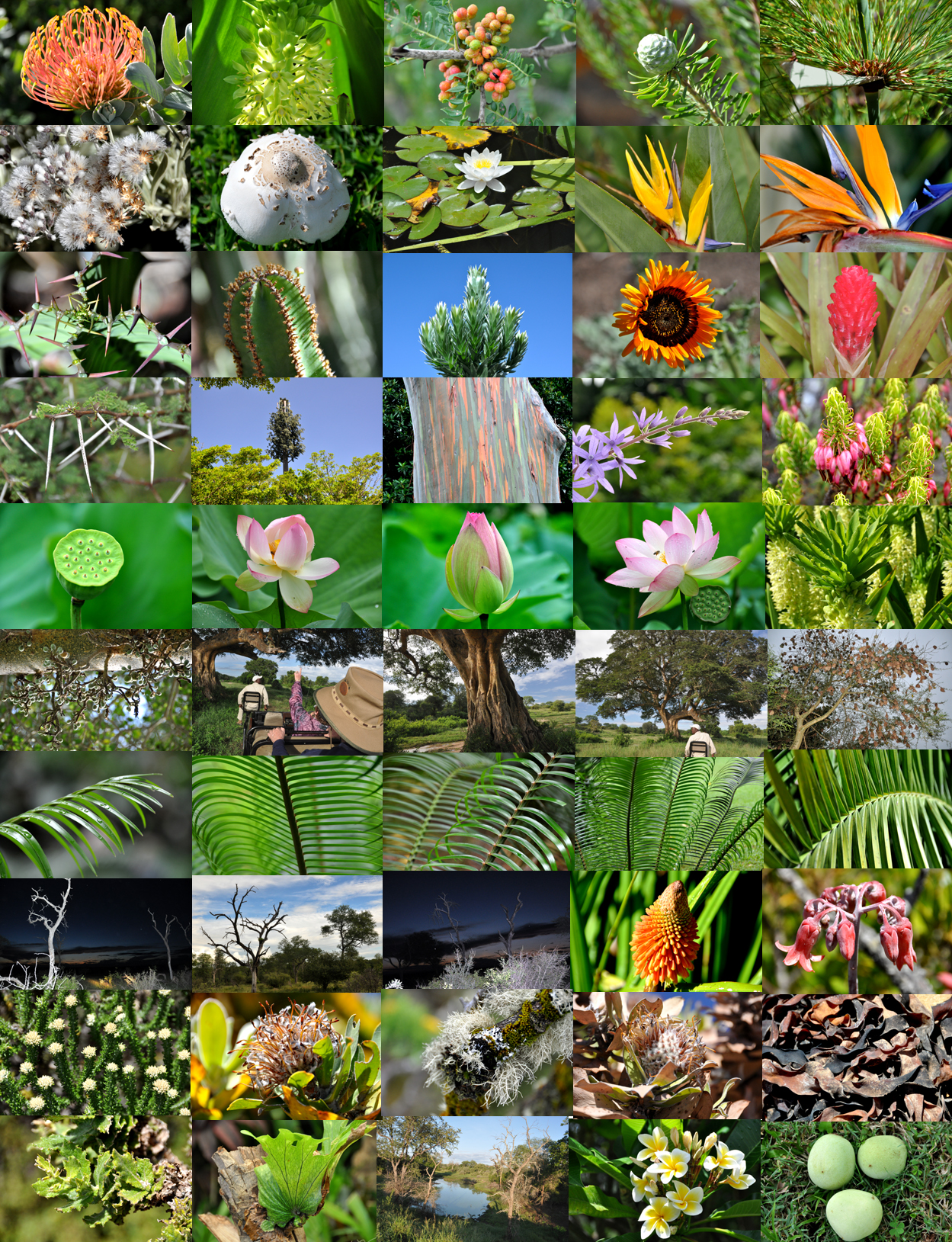
With their tall stems and palm-like leaves, cycads - which evolved about 300 million years ago, even before the dinosaurs - are the oldest seed plants on earth.
Of South Africa's 38 species of cycad, three are extinct in the wild and the remainder have been pushed close to the brink by thieves.
Collectors in America and the Far East are prepared to pay up to $10,000 for a large specimen of a rare species, encouraging a flourishing but illegal trade in these plants - either plucked from the wild, or taken from nature reserves and botanical gardens.
Ficus sycomorus grows to 20 meters tall and 6 meters wide with a dense round crown of spreading branches. The leaves are heart-shaped with a round apex, 14 cm long by 10 cm wide, and arranged spirally around the twig. They are dark green above and lighter with prominent yellow veins below, and both surfaces are rough to the touch. The fruit is a large edible fig, 2–3 cm in diameter, ripening from buff-green to yellow or red. They are borne in thick clusters on long branchlets or the leaf axilThe bark is green-yellow to orange and exfoliates in papery strips to reveal the yellow inner bark. Like all other figs, it contains a latex.
<> <<>> <<<>>> <<>> <>
Marula Fruit- Amarula Liqueur
The fruits have a light yellow skin, with white flesh, rich in vitamin C – about 8 times the amount found in an orange – are succulent, tart with a strong and distinctive flavor. Inside is a walnut-sized, thick-walled stone. The seeds have a delicate nutty flavor and are much sought after by various animals in Southern Africa. In the movie "Animals Are Beautiful People" by Jamie Uys, released in 1974, some scenes portray elephants, warthogs and monkeys becoming intoxicated from eating fermented marula fruit. Later research showed that these scenes, at least in large animals were improbable and, in all probability, staged. Elephants would need a huge amount of fermented marulas to have any effect on them, and other animals prefer the ripe fruit. The amount of water drunk by elephants each day would also dilute the effect of the fruit to such an extent that they would not be affected by it.
Marula fruit is used to make Amarula liqueur.